BabelStone Blog
Monday, 1 March 2010
The Ogham Stones of Wales
- The Ogham Stones of Cornwall and Devon
- The Ogham Stones of Wales
- The Ogham Stones of Scotland
- The Ogham Stones of the Isle of Man
- The Ogham Stones of Ireland
- The Ogham Stones of Elsewhere
Wales has the greatest number of Ogham stones of any region outside of Ireland (35 stones with definite Ogham inscriptions), but as can be seen from the map below, they are unevenly distributed, with large numbers in the south-west and the south-east, and only a handful in the north :
Location of Ogham Stones in Wales
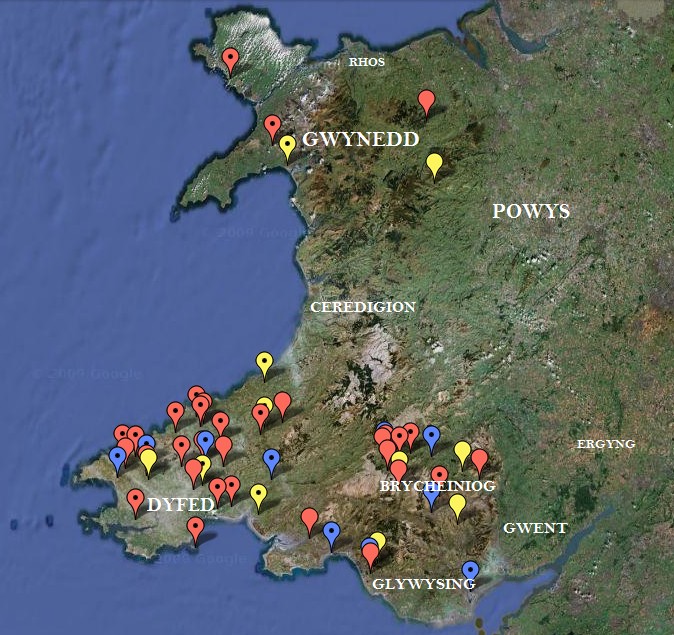
Red tags mark the sites of certain Ogham inscriptions (a dot indicates that the stone is in situ)
Yellow tags mark the sites of dubious or unconfirmed Ogham inscriptions
Blue tags mark museums or other sites where Ogham stones are held
The modern names of Post-Roman Welsh kingdoms are overprinted in white
Distribution of Ogham Stones by Kingdom
- Dyfed (Devet) : 22 certain stones (BRAW1/1, BRAW3/1, BRIDL/1, CALDY/1, CDWYR/1, CILGN/1, CLYDI/1, CLYDI/3, EGLWC/1, JRDNS/1, LDEIL/1, LDWKE/1, LFRN2/1, LGELR/1, LWNIO/1, MTHRY/1, NEVRN/1, NEVRN/2, RHDDL/1, SDOGM/1, SDOGW/1, STNTN/1) and 3 doubtful stones (HENLL/1, LDYSL/1, SPTTL/1).
- Ceredigion (Cereticiaun) : 1 doubtful stone (LARTH/1).
- Glywysing (Gleguising) : 2 certain stones (KENFG/1, LOUGH/1) and 2 doubtful stones (MARG1/1, SISHM/1)
- Brycheiniog (Brecheniauc) : 8 certain stones (ABHYD/1, CRAI/1, CRCKH/1, DFYNG/1, PONTS/1, TCSTL/1, TRLLW/1, YFLL2/1) and 3 doubtful stones (TIRPH/1, Maen Llia, Llanfihangel-Cwmdu).
- Gwynedd (Guined) : 3 certain stones (BRYNK/1, CLOCG/1, LFAEL/1) and 2 doubtful stones (PTREF/1, TFLYS/1).
The distribution of Ogham stones in Wales closely reflects the geopolitical situation of post-Roman Britain. The majority of stones are concentrated in the area of south-west Wales that belonged to the Kingdom of Dyfed (early 5th century through to the early 10th century), which was the major centre for Irish settlement in Wales during the post-Roman period. During the late 4th century and early 5th century large numbers of the Déisi crossed from the Waterford area of Ireland to Britain, and settled in the land of the Demetae in south-west Wales. Their leaders displaced the original British ruling class, and founded the kingdom of Dyfed, which is believed to have been bounded on the north by the River Teifi and on the east by the River Tywi. Dyfed was neighboured on the north by the Brythonic Kingdom of Ceredigion, and to the south-east by the Brythonic Kingdom of Glywysing, but to the east lay the Kingdom of Brycheiniog (largely corresponding to the area of modern Brecknockshire), which had also been founded by Irish raiders, and was ruled by kings of Irish descent.
Irish Settlements in Western Britain
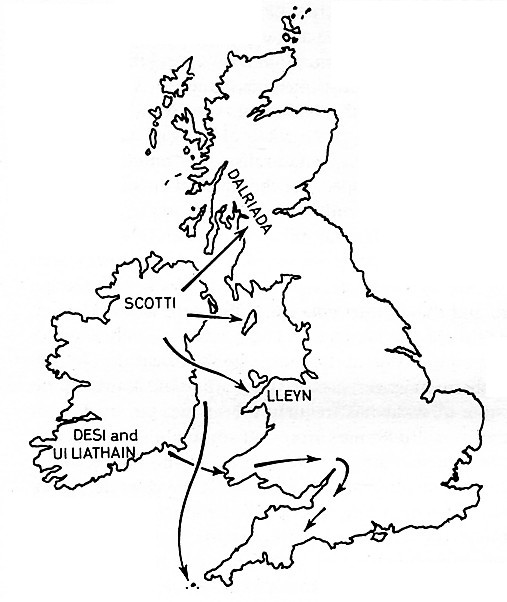
Source : Lloyd Laing, The Archaeology of Late Celtic Britain and Ireland, c. 400–1200 AD (Methuen, 1975) Fig. 1
Over twenty Ogham stones are found within the territory of Dyfed, including a couple of stones which are just on the other side of the River Teifi, in erstwhile Cardiganshire (RHDDL/1 and LDYSL/1), but the modern course of the river clearly deviates from the course the river took fifteen hundred years ago, and they would originally have been on the Dyfed side of the river. At least eight Ogham stones are also found in the territory of Brycheiniog, testifying to the strength of Irish settlement in these two areas, and evidence that the Irish language was widely spoken here, at least by the ruling elite and land owners. There are also two Ogham stones east of the River Tywi, in what would probably have been the territory of Glywysing, suggesting that Irish settlement pushed eastwards from Dyfed into the western part of its Brythonic neighbour. To the north of Dyfed, in the territory of Ceredigion there is only one doubtful Ogham stone (LARTH/1).
In contrast to the large number of Ogham stones in South Wales (at least 32), there are only three certain Ogham inscriptions in North Wales, all within the territory of the Kingdom of Gwynedd. There had been extensive Irish raiding and settlement in the north of Wales as well as in the south, especially in the Llŷn Peninsula (the name of which is derived from the Laigin, the men of Leinster) and Anglesey, but during the late 4th century and early 5th century there was strong resistence to the Irish incursions, led by Cunedda (founder of the kingdom of Gwynedd), and the Irish did not manage to gain control of any of the kingdoms in the north. So it is perhaps to be expected that there are a few Ogham stones in the area of Gwynedd, but not very many, reflecting the presence, but not dominance, of Irish settlers in the region.
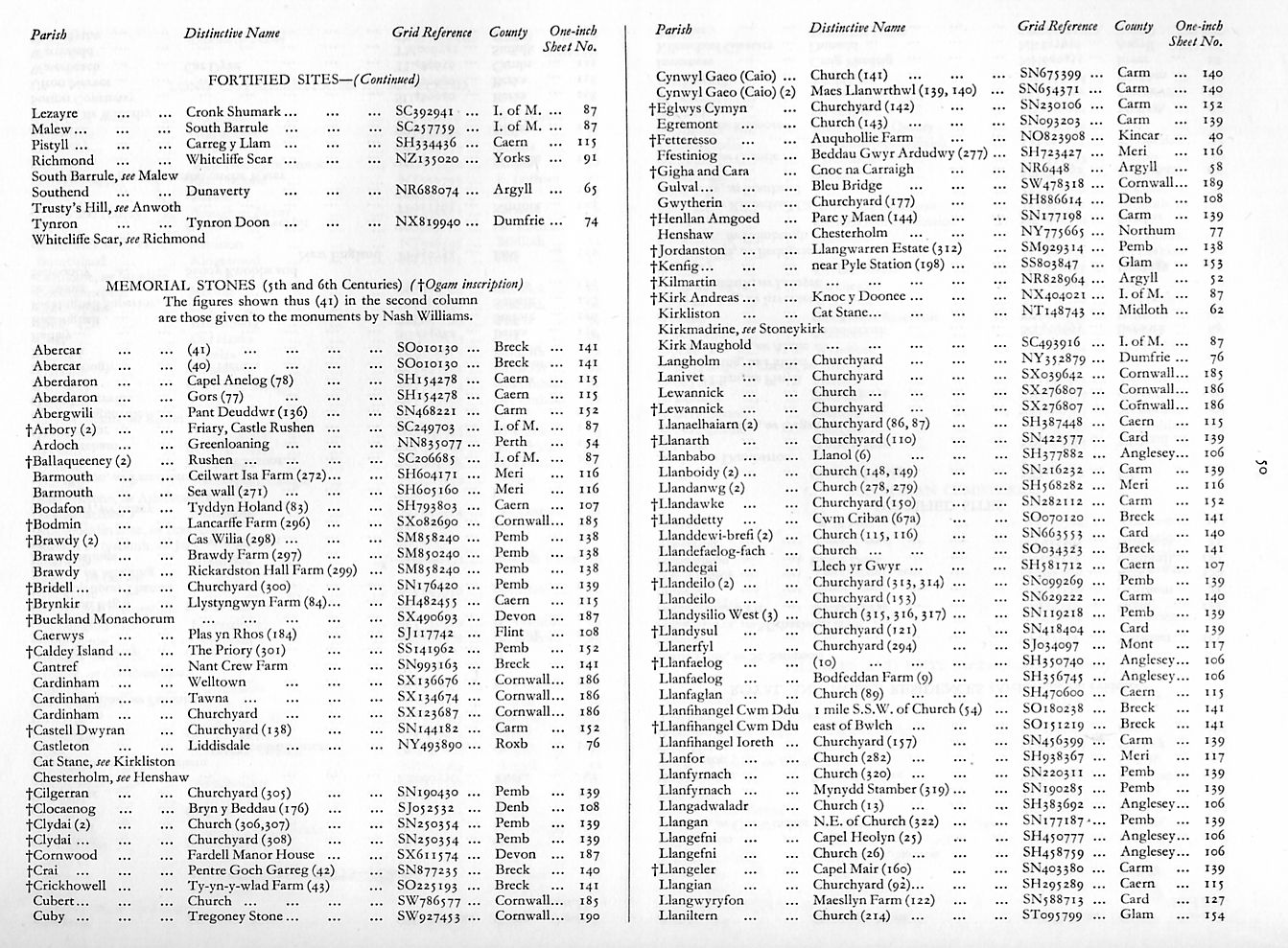
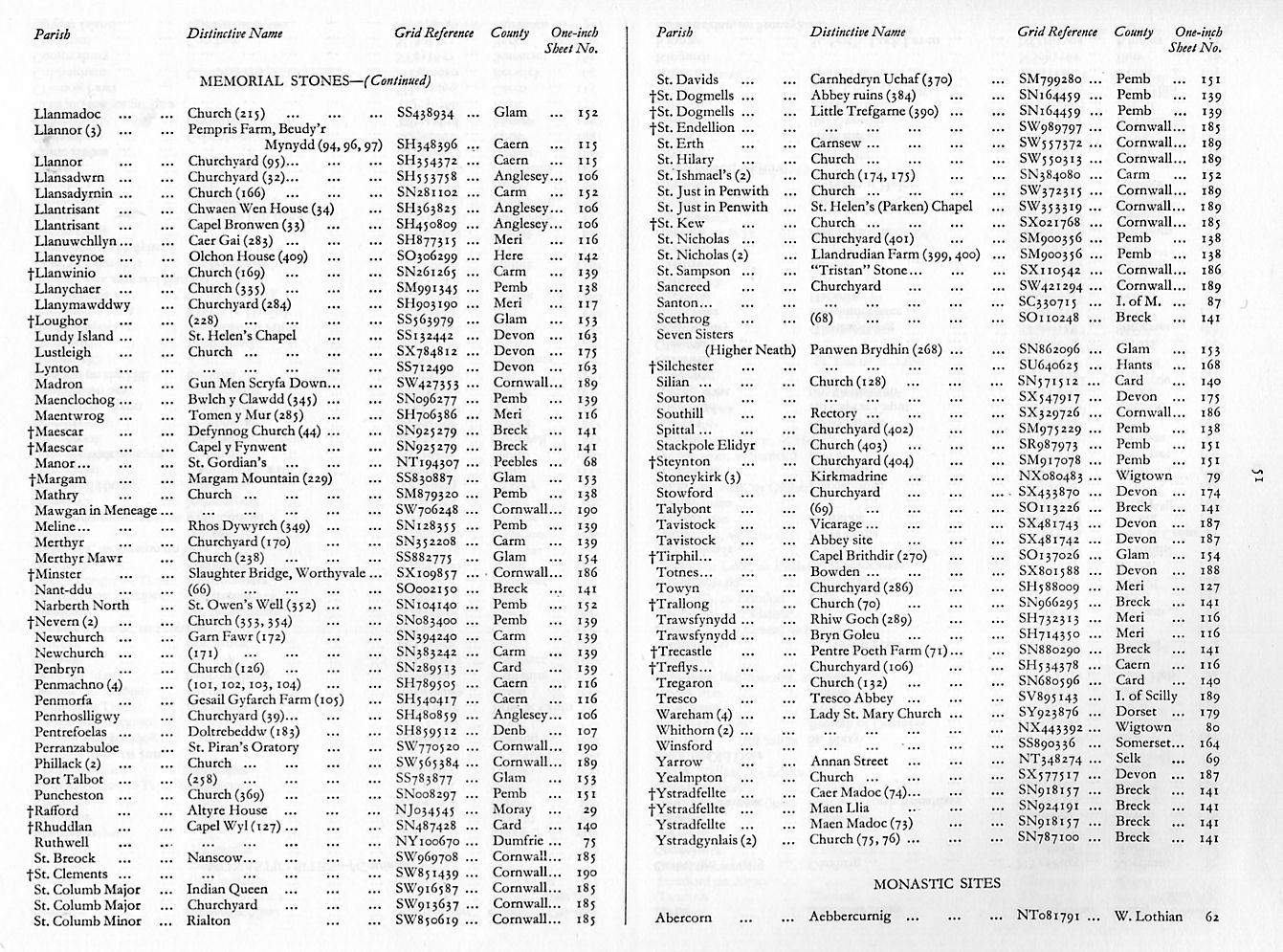
The Ordnance Survey Map of Britain in the Dark Ages (first published 1935) gives a very useful overview of the archaeological remains in Britain during the period 410–871, and comes with indexes which give the exact location of each feature marked on the map. In the case of Celtic memorial stones (with or without Ogham inscriptions), where possible the index on pages 50 and 51 provides a reference to Nash-Williams' The Early Christian Monuments of Wales (Cardiff, 1950), from which it is possible to identify the stone in question in the CISP database.
Ordnance Survey : Wales in the Dark Ages
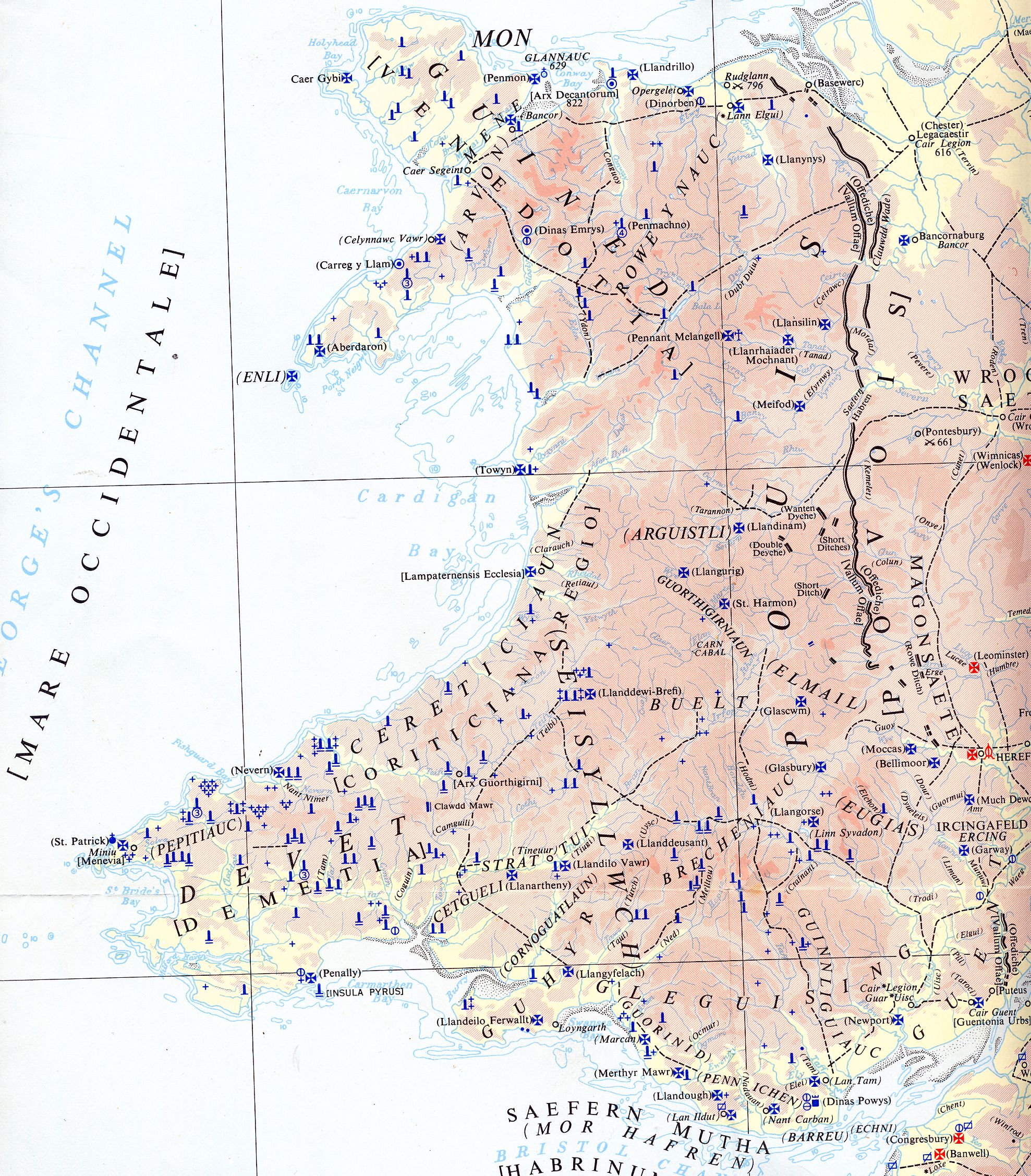
Source : Map of Britain in the Dark Ages 2nd Edition (Ordnance Survey, 1966)
Key (selected features only)
- ♗♗ = Bishop's seats
- ✠✠ = Monastic sites
- ♁ = Hermitages
- ⚔ = Sites of battles
- ◉ = Forts
- ⊥ = Memorial stones (5th–6th centuries)
- ⍊ = Memorial stones (5th–6th centuries) with ogams
- + = Minor Christian monuments in Wales (7th–9th centuries)
- ♰♰ = Free-standing crosses
- • = Casual finds in Celtic area
- ⦶ = Imported Mediterranean pottery
- ⊖ = Frankish-Gaulish ware
Blue = Celtic
Black = Pagan Anglo-Saxon
Red = Christian Anglo-Saxon
This map is very useful, but strangely enough there are a number of memorial stones in both Cornwall and Wales that are marked as having an Ogham inscription for which I can find no evidence for actually having an Ogham inscription :
- Lancarffe House, Bodmin, Cornwall (LCARF/1)
- Llanfaelog, Anglesey (LFAEL/1) [not marked as an Ogham stone on the actual map, but indicated as having an Ogham inscription in the index of Memorial Stones on page 50]
- Llanfihangel-Cwmdu, Brecknockshire (No CISP entry)
- Ystradfellte, Brecknockshire (No CISP entry)
- Margam Mountain (Mynydd Margam), Glamorganshire (MARG1/1)
Up until a few days ago I had assumed that these must all have been accidentally mislabelled by the editors of the map, and that they were almost certainly without any Ogham inscription. However, on Monday I noticed on the page describing the forthcoming third volume of A Corpus of Early Medieval Inscribed Stones and Stone Sculpture in Wales the statement that "[d]iscoveries made in the course of fieldwork in 2007 include a previously unknown ogam inscription on a roman-letter inscribed stone from Llanfaelog". Upon enquiry, Professor Nancy Edwards was kind enough to provide me with the details of this discovery, and it transpires that the Ogham inscription is on the stone indicated as having an Ogham inscription on it in the index of memorial stones in the Map of Britain in the Dark Ages (cross-referenced to ECMW 10, the Mailisi stone). This stone and its Latin inscription, MAILISI, was first noticed by John Skinner in 1802 (Ten Days Tour through the island of Anglesea page 42 and 48; in Archaeologia Cambrensis Supplement, July 1908), when it was already in use as a lintel in a barn, and it remained built into the barn wall until the barn was demolished in 2001. Skinner only notes a Latin inscription, and I can find no mention of an Ogham inscription on this stone in any source other than the Ordnance Survey map. Moreover, according to Professor Edwards the Ogham inscription was not visible until the stone had been removed from the structure of the barn in 2001, so where, I wonder, did the Ordnance Survey get the idea that the stone did have an Ogham inscription on it ? Perhaps it is just a lucky coincidence that they accidentally mismarked the Mailisi stone as an Ogham stone, but given that there are nearly fifty memorial stones in North Wales, and only two of them (other than this stone) definitely have an Ogham inscription, it would be remarkably serendipitous to make such a mistake on the one stone that really does have an Ogham inscription amongst all the others that do not. I wonder if perhaps at one time the Ogham inscription was visible, and had been noticed by an Ordnance Survey surveyor, but later became obscured when the window it was a lintel to was perhaps rebuilt, and so the Ogham inscription was not noticed by Nash-Williams. Whatever the true explanation may be, it has made me think again about the other four stones in Wales and Cornwall that only the Ordnance Survey map indicates as having an Ogham inscription on them. Does the Ordnance Survey perhaps know something about these stones that Macalister, Nash-Williams and everyone else did not know ?
A further issue with the Ordnance Survey map (and also with the Wikipedia map) is that some of the stones indicated as having an Ogham inscription may not really have an Ogham inscription on them at all. Because of the nature of the Ogham script and the way that it is carved along edge of stones, Ogham inscriptions tend to be less durable than Latin inscriptions. Over the centuries the edges of a stone can become abraded, and the strokes of Ogham letters (especially the vowel letters) can disappear. The result of this is that most Ogham inscriptions are incomplete, and need to be reconstructed to a certain extent. This also means that ogamologists need to be on the look out for odd incisions and marks on the edges of stones that might be the vestiges of an Ogham inscription that has been all but worn away. Unfortunately, this also means that natural features of the rock or marks made by later processes (such as sharpening farm implements or weapons) may be mistaken for the remnant strokes of Ogham letters. It is also possible that Ogham inscriptions were deliberately obliterated at a later date, usually when a cross was added to the stone, either because they were thought to be pagan marks or because they were aesthetically displeasing.
R. A. S. Macalister, author of the monumental Corpus Inscriptionum Insularum Celticarum [CIIC], had a particularly fanciful imagination when it came to recognising remnants of Ogham inscriptions. Macalister identifies LARTH/1 (CIIC 348), LDYSL/1 (CIIC 349), SISHM/1 (CIIC 376), HENLL/1 (CIIC 364), PTREF/1 (CIIC 401) and TIRPH/1 (CIIC 404) in Wales, and SENDL/1 (CIIC 478) and SCLEM/1 (CIIC 473) in Cornwall, as having traces of an Ogham inscription on them. In a couple of cases there is no visible trace of any Ogham letters left on the stone, but Macalister speculates that a perceived pattern of flaking along the edges indicate that an original Ogham inscription has been deliberately obliterated. Macalister is the only authority to see the remnants of an Ogham inscription on most of these eight stones, and for some of these stones other authorities have explicitly discounted the possibility of an Ogham inscription. Thus, it is doubtful that these stones did originally have an Ogham inscription on them, but because they have been identified as having one by Macalister, they are still marked as such on the Ordnance Survey and Wikipedia maps. I have attempted to distinguish between certain Ogham inscriptions (including stones such as DFYNG/1 and MTHRY/1 that have vestiges of an Ogham inscription that are recognised by more than one authority) and doubtful Ogham inscriptions on my map, by marking certain Ogham stones with a red tag (35 stones), and marking doubtful and unconfirmed Ogham stones with a yellow tag (11 stones).
The Welsh Ogham stones are all dated to the 5th and 6th centuries, and as is the case with the Ogham stones of Cornwall and Devon, most of them have a dual inscription, in Latin (script and language) on the face of the stone, and and in Ogham/Irish on the edge of the stone. Of the 35 definite Ogham stones in Wales, only five do not have a corresponding latin inscription (BRAW1/1, BRIDL/1, LFRN2/1, LOUGH/1, YFLL2/1). In all cases the inscription records the name of a person, and optionally the name of the person's father or some other familial relationship. In almost all cases the commemorated person is male, but in one case the Ogham inscription refers to the commemorated person as the daughter of someone (EGLWC/1).
Seven of the Latin inscriptions on biscript stones incorporate the hic iacit "here lies" formula, and a little over half of the definite Ogham stones are sited in churchyards or in churches, so it seems probable that most of the stones were memorial stones or grave markers (although none have been archaeologically associated with a grave). Two stones from Brawdy, one Ogham only (BRAW1/1) and one Ogham and Latin (BRAW3/1), were found next to an Iron Age hill fort (they were being used as a footbridge and as a gatepost, so they may well have been moved from an original location inside the hill fort). It has been suggested that the hill fort may have been reused as burial site, as was the case with some other hill forts in south-west Wales during the early medieval period, which would explain the presence of two Ogham stones in the same location (see Nancy Edwards, Early-Medieval Inscribed Stones and Stone Sculpture in Wales: Context and Function page 22). Another stone (CLOCG/1) originally stood on the summit of a burial mound called Bryn-y-Beddau "Hill of the Graves", in the close viscinity of a number of stone circles. Two stones originally stood close to Roman roads : the memorial to Icorix (BRYNK/1) was 200 m. from the road to Caernarfon and 300 m. from a minor Roman fort; and the memorial to Voteporix the Protector (CDWYR/1) was found at the edge of a churchyard about 200 m. south of a Roman road. The siting of these two memorial stones may reflect a continuation of the Roman custom of roadside burial, or may simply thave been intended to let the memorial be seen by people travelling along the road. Although most stones were probably memorials to the dead, there are also a few stones that are sited on open moorland (YFLL2/1) or in mountainous countryside (PONTS/1) that are nowhere near ecclesiastical or burial sites, and so may have been used as markers of land ownership, as was probably the original purpose of Ogham stones in Ireland.
The names engraved in the Ogham inscriptions on the Welsh stones are overwhelmingly Goidelic, with only a few names that are probably Brythonic, some possibly indicative of intermarriage between Irish settlers and the native British inhabitants :
- TRENACCATLO "Of Trenaccatlo" [corresponding to Trenacatvs in the associated Latin inscription] (RHDDL/1)
- INIGENA CUNIGNI AVITTORIGES "Of the daughter of Cunignos, Avittoriga" [the daughter's name is either Goidelic or Brythonic, but the father's name is Brythonic; this stone is perhaps a memorial to his British wife set up by an Irish settler] (EGLWC/1)
- MAGLICUNAS MAQI CLUTARI "Of Maglicunas, son of Clutarias" [both names are Brythonic, and Thomas 1994 identifies the father with Clotri, one of the kings of Dyfed] (NEVRN/1)
- SAGRAGNI MAQI CUNATAMI "Of Sagragnus, son of Cunatamus" [the son's name is Goidelic, but the father's name is Brythonic] (SDOGM/1)
In comparison with Cornwall and Devon, where three of the six definite Ogham inscriptions that we can read commemorate people with Latin names (Ingenuus, Iustus and Latinus), only four out of the thirty-five definite Ogham inscriptions in Wales commemorate someone with a Latin name. This difference is probably due to the relatively small number of Irish settlers in Dumnonia becoming culturally assimilated within the Romano-British population; whereas the Irish settlers in Wales belonged to large Irish communities, and so there was no pressure on them to adopt Latin names in favour of Irish names.
- ETTERNI MAQI VICTOR "Of Etternus, son of Victor" [both names are Latin] (CLYDI/1)
- TURPILLI MAQI TRILLUNI "Of Turpillius, son of Trillunus" [both names are Latin] (CRCKH/1)
- POPIAS ROLION MAQI LLENA "Of Popia, ... son of Llena" [Popia or Popias is probably a Celticized version of the name Pvmpeivs given in the associated Latin inscription] (KENFG/1)
- VITALIANI "Of Vitalianus" (NEVRN/2)
The CRCKH/1 and KENFG/1 inscriptions both illustrate the use of the rare Ogham letter Ifin or Iphin (earlier Pin, from Latin pinus "pine" or spina "thorn" ?) ᚘ (in manuscript texts written as two overlapping diagonal crosses, but in monumental inscriptions written as a single diagonal cross) that is used to represent /p/ in Latin, Brythonic or Pictish names. As Primitive Irish did not have a /p/ sound there was originally no Ogham letter for /p/, and so the cross-shaped letter was added to represent this foreign sound. In later medieval Irish tradition this letter was repurposed as the diphthong /io/, and a new letter Peith ᚚ introduced to represent /p/ in its place. The only other definite occurence of this letter on an Ogham stone inscription is in County Kerry, Ireland (COOLE/1), where it is used to write the name Erpenn, which Macalister suggests is a hybrid of the Pictish name Erp and the Irish diminuitive -én.
One other interesting feature of the Ogham transcription of non-Irish names is exhibited by the St Dogwell's stone (SDOGW/1), where the name written in the Latin script as HOGTIVIS is written in the Ogham script as OGTEN[AS]. The language and derivation of the name Hogtivis is obscure, but it cannot be Goidelic. In writing the name Hogtivis in Ogham letters, the initial H has been dropped, which confirms that the Ogham letter uath ᚆ, which in later medieval Irish tradition is used to represent the Latin letter H, but which does not occur in Ogham inscriptions on memorial stones, was not used to represent the /h/ sound at this time. Exactly what the original phonetic value of this letter was is unknown ([y] has been suggested), but it had become obsolete by the time that Primitive Irish came to be inscribed on memorial stones in the 4th to 6th centuries.
[The Ogham stones of Wales are grouped in tables according to the historic county in which they are sited.]
Anglesey (Sir Fôn)
 Llanfaelog Stone (LFAEL/1)
| Site | Penseiri Farm, Trecastell, Llanfaelog, Anglesey. |
| NGR | SH 3346 7066 |
| Current Location | In an outbuilding north of the farmhouse (the barn having been demolished in 2001). |
| History | Found in 1802 in a field, then used as the lintel for a window in a nearby barn. |
| Description | Rectangular slab with vertical Latin inscription on one face, and an Ogham inscription along one edge. |
| Dimensions | Unknown. |
| Date | 400–533 (Nash-Williams 1950) 400–599 (Edwards 2010) |
| Notes | This stone is marked as an Ogham stone on the Ordnance Survey Map of Britain in the Dark Ages, but no Ogham inscription is noted in the CISP database or appears to have been published elsewhere. When the stone was examined by Professor Nancy Edwards in 2007 she noticed the remnants of a previously unrecorded Ogham inscription on the stone (my thanks to Professor Edwards for kindly providing me with details of the stone and its inscriptions in advance of its publication in the forthcoming third volume of A Corpus of Early Medieval Inscribed Stones and Stone Sculpture in Wales covering North Wales). |
| References |
CISP LFAEL/1 Nash-Williams 1950 10 |
|
Nash-Williams 1950 #10 |
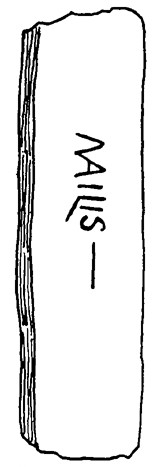
Latin Inscription
| Transcription | {MA}ILISꟷ |
| Reading | MAILISI |
| Translation | Of Mailisus |
Ogham Inscription
| Ogham Text | ᚋᚐᚔᚂᚔᚄᚔ (left edge, bottom-to-top ?) |
| Transcription | M[--]S[--] |
| Reading | M[AILI]S[I] |
| Translation | Of Mailisus |
Brecknockshire (Sir Frycheiniog)
Aberhydfer Stone (ABHYD/1)
| Site | Aberhydfer, Trecastle, Powys. |
| NGR | SN 8590 2780 |
| Current Location | Inside St David's Church, Llywel. |
| History | Found in 1954 by Canon Jones-Davies in a wall/hedge blocking an old trackway by the River Usk. |
| Description | Sandstone pillar stone with a vertical Latin inscription on one face, and an Ogham inscription along the left edge. |
| Dimensions | 1.82 × 0.33 × 0.22 m. |
| Date | |
| Notes | The Ogham inscription cuts across the Latin inscription where the stone has been chamfered, indicating that the Ogham inscription postdates the Latin inscription. |
| References | CISP ABHYD/1 |
Latin Inscription
| Transcription | [--]CIVS | [--]VS: | [--]AV[R] | [-][A]NVS[--] |
| Reading | [LU]CIVS [FILI]VS [T]AVR[I]ANVS |
| Translation | Lucius, son of Taurianus |
Ogham Inscription
| Ogham Text | ᚈᚐᚏᚔᚉᚑᚏᚑ (left edge, bottom-to-top) |
| Transcription | TARI[--]OR[--] |
| Reading | TARI[C]OR[O] |
| Translation | Of Taricoris (or Taricorus) |
Crickhowell Stone (CRCKH/1)
| Site | Ty-yn-y-wlad Farm, Crickhowell, Powys. |
| NGR | SO 2250 1930 |
| Current Location | Brecknock Museum & Art Gallery, Brecon [Cast No. 06.482]. |
| History | Found in 1774 by the side of a field. |
| Description | Pillar stone with a vertical Latin inscription in three lines on one face, and an Ogham inscription along the left edge. |
| Dimensions | 1.98 × 0.53 × 0.18 m. |
| Date | 500–599 (Nash-Williams 1950) |
| Notes | |
| References |
CISP CRCKH/1 Macalister 1945 #327 Nash-Williams 1950 43 Ferguson 1887 189 Brash 1869 153 |
|
Macalister 1945 #327 |
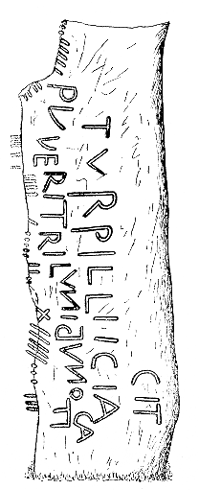
Latin Inscription
| Transcription | CIT | TVRPILLIICIA | PVVERITRILVNIDVNOCA | TI |
| Reading | TVRPILLI <H>IC IACIT PVVERI TRILVNI DVNOCATI |
| Translation | Of Turpillius. here lies the son of Trilunus Dunocatus |
Ogham Inscription
| Ogham Text | ᚈᚒᚏᚘᚔᚂᚂᚔᚋᚐᚊᚔᚈᚏᚔᚂᚂᚒᚅᚔ (left edge, bottom-to-top) |
| Transcription | TURPIL[--]LUN[U!] |
| Reading | TURPIL[LI] [MAQI] [TRIL]LUNI |
| Translation | Of Turpillius, son of Trillunus |
| Notes | Macalister reads as TURPILI MOSAC TRALLONI "Of Turpilus, boy (=attendant) of Trallonus". |
 Defynnog Stone (DFYNG/1)
| Site | St Cynog's Church, Defynnog, Maescar, Powys. |
| NGR | SN 9250 2790 |
| Current Location | In Situ. |
| History | Discovered in 1853, at which time it was built into the external face of the church tower. |
| Description | Sandstone pillar stone with a vertical Latin inscription in two lines on one face, an uncertain Ogham inscription along the right edge, and an engraved cross at one end. |
| Dimensions | 1.68 × 0.25 × 0.15 m. |
| Date | 400–533 (Nash-Williams 1950) |
| Notes | The reading of the Ogham inscription is uncertain, as only a few isolated strokes of the original inscription remain. "Ogham, almost all of which was trimmed away by the masons. Only the tips of three letters lying upon the H-surface remain" (Macalister 1945 p.318). "Possible vestiges of Ogams appear on the r. angle of the face" (Nash-Williams 1950 p.69). The cross was probably added later, changing the original orientation of the stone. |
| References |
CISP DFYNG/1 Macalister 1945 #328 Nash-Williams 1950 44 |
|
Macalister 1945 #328 |
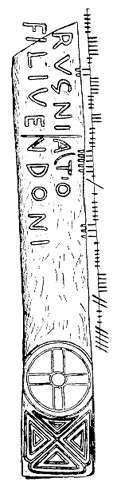
Latin Inscription
| Transcription | RVGNIATIO | [--]LIVENDONI |
| Reading | RUGNIATIO FILI VENDONI |
| Translation | Of Rugniatis, son of Vendonius |
Ogham Inscription
| Ogham Text | ᚏᚒᚌᚅᚔᚐᚈᚔᚐᚋᚐᚊᚔᚃᚓᚅᚇᚑᚅᚔ (right edge, bottom-to-top) |
| Transcription | [--]T[--]Q[--]D[--] |
| Reading | [RUGNIA]T[IA MA]Q[I VEN]D[ONI] |
| Translation | Of Rugniatis, son of Vendonius |
Trecastle Stone (TCSTL/1)
| Site | Pentre Poeth Farm, Capel Llanilid, Trecastle, Powys. |
| NGR | SN 8700 2900 |
| Current Location | British Museum (G41) [1878,1102.1]. |
| History | Found in 1878 in rough farmland. |
| Description | Sandstone pillar stone with a vertical Latin inscription on one face, and an Ogham inscription along the right edge. |
| Dimensions | Unknown. |
| Date | 400–533 (Nash-Williams 1950) |
| Notes | The stone is richly decorated on the reverse (click on the image to see both sides of the stone), but these decorations were probably added later, and are upsidedown with respect to the original orientation of the stone. |
| References |
CISP TCSTL/1 Macalister 1945 #341 Nash-Williams 1950 71 Ferguson 1887 205 |
|
|
Macalister 1945 #341 |
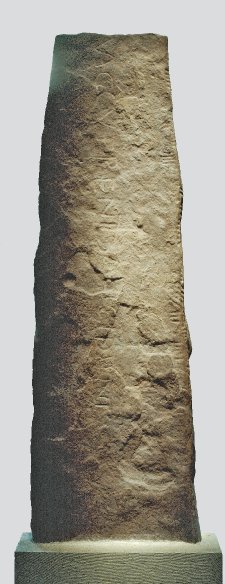
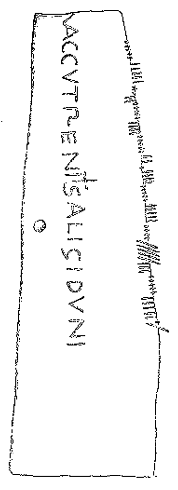
Latin Inscription
| Transcription | {MA}CCVTRENI+SALICIDVNI |
| Reading | MACCVTRENI + SALICIDVNI |
| Translation | Of Maccutrenus Salicidunus |
Ogham Inscription
| Ogham Text | ᚋᚐᚊᚒᚈᚏᚓᚅᚔᚄᚐᚂᚔᚉᚔᚇᚒᚅᚔ (right edge, bottom-to-top) |
| Transcription | MAQUTRENISALICIDUNI |
| Reading | MAQUTRENI SALICIDUNI |
| Translation | Of Maquutrenus Salicidunus |
| Notes | This is the reading of Nash-Williams 1950. Macalister 1945 reads MAQITRENI instead of MAQUTRENI. |
Crai Stone (CRAI/1)
| Site | Pentre Goch Garreg, Crai, Brecknock, Powys. |
| NGR | SN 8770 2350 |
| Current Location | Lost. |
| History | First recorded in 1698 by Edward Lhuyd. |
| Description | Pillar stone with a vertical Latin inscription in two lines on one face, and an Ogham inscription along the left edge. |
| Dimensions | 3.20 × 0.30 × 0.15 m. |
| Date | 400–533 (Nash-Williams 1950) |
| Notes | This stone is only known from a 1698 drawing by Edward Lhuyd, who was unaware at the time that the marks along the edge of the stone were Ogham letters (it was not until 1702–1707 that Lhuyd recognised the marks on the edge of EMLGE/1 as an alphabetic inscription, but even then he did not realise that they were Ogham ["Several Observations Relating to the Antiquities and Natural History of Ireland"; in Philosophical Transactions of the Royal Society of London vol.27 (1710) pp.503–506]). The Ogham inscription as drawn by Lhuyd cannot be meaningfully interpretted. |
| References |
CISP CRAI/1 Macalister 1945 #329 Nash-Williams 1950 42 |
|
Nash-Williams 1950 #42 |
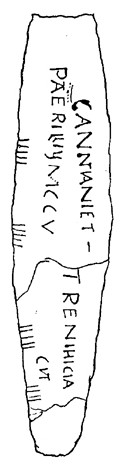
Latin Inscription
| Transcription | CAN{NT}IANIET | P{AT}ERILLIVS{MA}CCV | TRENIHICIA | CIT |
| Reading | CANNTIANI ET PATER ILLIVS MACCVTRENI HIC IACIT |
| Translation | Of Cantianus and his father Maccutrenus, he lies here |
Ogham Inscription
| Ogham Text | ᚁᚋ ᚄ ᚅ ᚅ ᚅ (left edge, bottom-to-top) |
| Transcription | B[M][--]S[--]N[--]N[--]N |
| Reading | |
| Translation |
 Llanfihangel-Cwmdu Stone
| Site | Llanfihangel-Cwmdu, Powys. |
| NGR | SO 1510 2190 |
| Current Location | In situ ? |
| History | |
| Description | Pillar stone. |
| Dimensions | Unknown. |
| Date | |
| Notes | Marked as an Ogham stone on the Ordnance Survey Map of Britain in the Dark Ages, but there appears to be no entry for this stone in the CISP database. |
| References |
Trallong Stone (TRLLW/1)
| Site | St David's Church, Trallwng (Trallong), Brecknock, Powys. |
| NGR | SN 9660 2950 |
| Current Location | Inside the new St David's Church, Trallong. |
| History | Discovered in 1856, at which time it was being used as the lintel for a window in the old church. |
| Description | Sandstone pillar stone with a vertical Latin inscription in two lines on one face, and Ogham inscription along the left edge, and an engraved cross at one end. |
| Dimensions | 1.75 × 0.36 × 0.13 m. |
| Date | 400–533 (Nash-Williams 1950) 500–550 (Jackson 1953) |
| Notes | The cross was added later, changing the original orientation of the stone. |
| References |
CISP TRLLW/1 Macalister 1945 #342 Nash-Williams 1950 70 Ferguson 1887 199 Brash 1869 161 |
|
Macalister 1945 #342 |
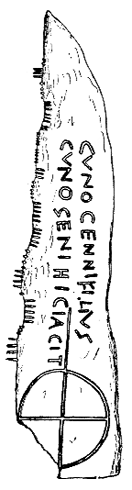
Latin Inscription
| Transcription | CVNOCENNIFILIVS | CVNOGENIHICIACIT |
| Reading | CVNOCENNI FILIVS CVNOGENI HIC IACIT |
| Translation | Of Cunocennius, son of Cunogenus, he lies here |
Ogham Inscription
| Ogham Text | ᚉᚒᚅᚐᚉᚓᚅᚅᚔᚃᚔᚔᚂᚃᚃᚓᚈᚑ (left edge, bottom-to-top) |
| Transcription | CUNACENNIFIILFFETO |
| Reading | CUNACENNIVI ILVVETO |
| Translation | Of Cunacennivus Ilvveto(s) |
| Notes | The latter part of the inscription is problematic, and several different interpretations have been offered. |
Pontsticill Stone (PONTS/1)
| Site | Ystrad mountain, Pontsticill, Merthyr Tydfil. |
| NGR | SO 0730 1310 |
| Current Location | In Cwm Criban valley below Ystrad mountain (rediscovered by Webley in 1957). |
| History | Discovered in 1694 on Ystrad mountain (according to Edward Lhuyd). |
| Description | Pillar stone with a faint Latin inscription on one face, and an Ogham inscription along the left edge. |
| Dimensions | 1.65 × 0.35 × 0.30 m. |
| Date | 400–599 (Nash-Williams 1950) |
| Notes | |
| References |
CISP PONTS/1 Macalister 1945 #336 Nash-Williams 1950 67A |
Latin Inscription
| Transcription | [--] | [--]MAQI[--] |
| Reading | [--] MAQI [--] |
| Translation | ..., son of ... |
Ogham Inscription
| Ogham Text | ᚋᚐᚊᚔᚇᚓᚉᚓᚇᚐ (left edge, bottom-to-top) |
| Transcription | M[--]Q[--]D[--]C[--]DA |
| Reading | M[A]Q[I]D[E]C[E]DA |
| Translation | Maqi-Deceda |
Ystradfellte Stone I (YFLL2/1)
| Site | Pen-y-Mynydd, Ystradfellte, Caer Madoc, Powys. |
| NGR | SN 9180 1570 |
| Current Location | Cyfarthfa Castle Musuem & Art Gallery, Merthyr Tydfil, Glamorgan. |
| History | Discovered in 1789 on open moorland. |
| Description | Pillar stone with an Ogham inscription along the left edge, and an engraved cross at one end. |
| Dimensions | 1.88 × 0.25 × 0.25 m. |
| Date | 400–599 (Nash-Williams 1950) |
| Notes | |
| References |
CISP YFLL2/1 Macalister 1945 #345 Nash-Williams 1950 74 |
|
Macalister 1945 #345 |
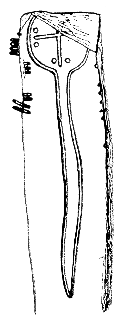
Ogham Inscription
| Ogham Text | ᚌᚂᚒᚃᚑᚉᚐ (left edge, bottom-to-top) |
| Ogham Text | ᚔ (right edge, bottom-to-top) |
| Transcription | GLUFOCA[--] | I[--] |
| Reading | GLUVOCA[--] I[--] |
| Translation | Of Gluvoca[..] |
Ystradfellte Stone II
| Local Name | Maen Llia |
| Site | Ystradfellte, Powys. |
| NGR | SN 9240 1910 |
| Current Location | In situ (near the road from Ystradfellte to Heol Senni). |
| History | |
| Description | Pillar stone with no visible inscriptions or marks. |
| Dimensions | Unknown. |
| Date | |
| Notes | This stone is marked as an Ogham stone on the Ordnance Survey Map of Britain in the Dark Ages, but there appears to be no entry for this stone in the CISP database. |
| References |
Caernarvonshire (Sir Gaernarfon)
Brynkir Stone (BRYNK/1)
| Site | Llystyngwyn Farm, Brynkir, Dolbenmaen, Gwynedd. |
| NGR | SH 4820 4554 |
| Current Location | Farmyard of Llystyngwyn Farm. |
| History | Discovered in 1902 near a gap in a hedge, 200 m. from a Roman road. |
| Description | Granite slab with a horizontal Latin inscription in three lines, and an Ogham inscription along the right edge. |
| Dimensions | 1.02 × 1.09 × 0.36 m. |
| Date | 500–599 (Nash-Williams 1950) |
| Notes | |
| References |
CISP BRYNK/1 Macalister 1945 #380 Nash-Williams 1950 84 |
|
Macalister 1945 #380 |
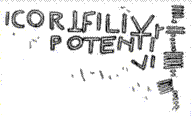
Latin Inscription
| Transcription | ICORIFILIVS | POTENTI | NI |
| Reading | ICORI<X> FILIVS POTENTINI |
| Translation | Icorix, son of Potentinus |
Ogham Inscription
| Ogham Text | ᚔᚉᚑᚏᚔᚌᚐᚄ (right edge, bottom-to-top) |
| Transcription | ICORIGAS |
| Reading | ICORIGAS |
| Translation | Of Icorix |
Treflys Stone (TFLYS/1)
| Site | St Michael's Church, Treflys, Gwynedd. |
| NGR | SH 5343 3784 |
| Current Location | Inside the church. |
| History | Discovered in 1904 in the foundation of the western wall of the churchyard. |
| Description | Slate pillar stone with a chi-rho cross and Latin inscription on one face. |
| Dimensions | 1.33 × 0.36 × 0.20 m. |
| Date | 500–599 (Nash-Williams 1950) |
| Notes | No Ogham inscription is now visible, but Macalister 1945 notes that the left hand edge has been chipped, "as though to destroy an Ogham". |
| References |
CISP TFLYS/1 Macalister 1945 #398 Nash-Williams 1950 106 |
|
Macalister 1945 #398 |
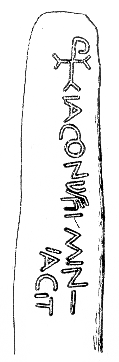
Latin Inscription
| Transcription | IACONVS{FI}{LIVS}MINꟷ | IACIT |
| Reading | IACONVS FILIVS MINI IACIT |
| Translation | Jaconus, son of Minus, lies [here] |
Cardiganshire (Sir Aberteifi)
Llanarth Stone (LARTH/1)
| Site | St David's Church, Llanarth, Ceredigion. |
| NGR | SN 4229 5772 |
| Current Location | Inside the church. |
| History | Found in 1808 in the churchyard. |
| Description | Cross stone with a damaged Latin inscription running vertically down the shaft of the cross, and a doubtful Ogham inscription along the left edge. |
| Dimensions | 1.47 × 0.61 × 0.25 m. |
| Date | 400–533 (Nash-Williams 1950) |
| Notes | The Ogham inscription is doubtful, and only legible to Macalister. "Apparently the artist of the cross did not notice his predecessor's work till he had completed his task, and when he did so, cautiously chipped it away, taking care not to spoil his own handiwork. He was obliged to spare the final S, which lay upon the arm of the cross, to avoid spoiling the latter with an unsightly flake. The work of destruction has not been complete: his carefulness has forced him to leave tips of scores along the B-surface: an R, an N (possibly), and L and a G can thus be traced; indeed, the second score of the last letter can be followed almost throughout its length. Restoring the vowels by the interspaces, and supplying an inevitable initial T, we arrive at TRENALUGOS as the most probable restoration" (Macalister 1945 p.333). "On the edge of the left arm-end what appear to be ogam strokes cannot be earlier than the cross and are likely to be strokes made by sharpening tools or weapons" (Thomas 1994 p.417). |
| References |
CISP LARTH/1 Macalister 1945 #348 Nash-Williams 1950 110 |
|
Macalister 1945 #348 |
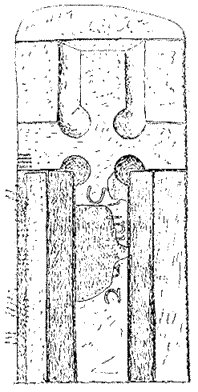
Latin Inscription
| Transcription | G[URHI][R^S]T |
| Reading | GURHI[R]T |
| Translation | Gurhirt (or Girhirst) |
Ogham Inscription
| Ogham Text | ᚈᚏᚓᚅᚐᚂᚒᚌᚑᚄ (left edge, bottom-to-top) |
| Transcription | [--]R[--]N[--]L[--]G[--]S |
| Reading | [T]R[E]N[A]L[U]G[O]S |
| Translation | Trenalugos |
| Notes | This is Macalister's restoration. |
Llandysul Stone (LDYSL/1)
| Site | St Tysul's Church, Llandysul, Ceredigion. |
| NGR | SN 4190 4060 |
| Current Location | Inside the church (set into the north wall of the vestry). |
| History | Discovered in 1703 in the wall of the churchyard. |
| Description | Broken piece of pillar stone with a vertical Latin inscription in three lines on one face, and a doubtful Ogham inscription on the left edge. |
| Dimensions | 0.44 × 0.36 m. |
| Date | 500–599 (Nash-Williams 1950) 525–575 (Jackson 1953) |
| Notes | The broken upper portion of a pillar stone. The Ogham inscription is doubtful, and has only been recognised by Macalister. "The surviving traces—mere distal tips of the scores—of the Ogham suggest a V and an R, probably relics of the name [VEL]V[O]R[IGES]" (Macalister 1945 p.335). |
| References |
CISP LDYSL/1 Macalister 1945 #349 Nash-Williams 1950 121 |
|
Macalister 1945 #349 |
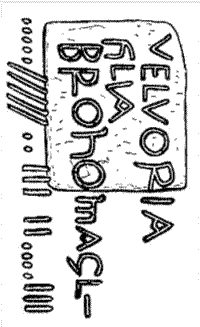
Latin Inscription
| Transcription | VELVOR[--] | {FI}LIA | BROHO[--] |
| Reading | VELVOR[IA] FILIA BROHO[MAGLI] |
| Translation | Velvoria, daughter of Brohomaglos |
Ogham Inscription
| Ogham Text | ᚃᚓᚂᚃᚑᚏᚔᚌᚓᚄ (left edge, bottom-to-top) |
| Transcription | [--]F[--]R[--] |
| Reading | [VEL]V[O]R[IGES] |
| Translation | Velvoriges |
Rhyddlan Stone (RHDDL/1)
| Site | Crug y Wyl Farm, Rhyddlan, Llanwenog, Ceredigion. |
| NGR | SN 4860 4241 |
| Current Location | National Museum of Wales, Cardiff. (A History of the World) |
| History | Discovered in 1808 in the foundations of the ruins of Capel Wyl. |
| Description | Rectangular pillar stone with a vertical Latin inscription in three lines on one face, and an Ogham inscription along the left and top edges. |
| Dimensions | 1.78 × 0.36 × 0.20 m. |
| Date | 400–533 (Nash-Williams 1950) |
| Notes | |
| References |
CISP RHDDL/1 Macalister 1945 #353 Nash-Williams 1950 127 Ferguson 1887 192 Brash 1869 160 |
|
Macalister 1945 #353 |
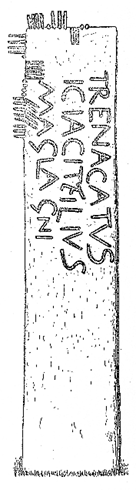
Latin Inscription
| Transcription | TRENACATVS | ICIACITFILIVS | MAGLAGNI |
| Reading | TRENACATVS <H>IC IACIT FILIVS MAGLAGNI |
| Translation | Trenacatus, here lies the son of Maglagnus |
Ogham Inscription
| Ogham Text | ᚈᚏᚓᚅᚐᚉᚉᚐᚈᚂᚑ (left and top edges, bottom-to-top) |
| Transcription | TRENACCATLO |
| Reading | TRENACCATLO |
| Translation | Of Trenaccatlo |
Carmarthenshire (Sir Gaerfyrddin)
Castell Dwyran Stone (CDWYR/1)
| Site | Castell Dwyran, Cilymaenllwyd, Carmarthenshire. |
| NGR | SN 1440 1819 |
| Current Location | Carmarthen Museum. |
| History | Discovered in 1895 in the churchyard fence. |
| Description | Pillar stone with an engraved cross and a horizontal Latin inscription in three lines on one face, and an Ogham inscription along the left and top edge. |
| Dimensions | 2.11 × 0.61 × 0.30 m. |
| Date | 540–550 (Nash-Williams 1950) 550–550 (Jackson 1953) 533–566 (McManus 1991) |
| Notes | VOTEPORIGIS/VOTECORIGAS has long been identified with Vortipor, a 6th-century king of Dyfed mentioned by Gildas, but recent scholarship tends to reject this identification on the basis that the lack of an R in the first syllable of the name in both the Ogham and Latin inscriptions cannot be reconciled with the spelling of the name given in historic sources. |
| References |
CISP CDWYR/1 Macalister 1945 #358 Nash-Williams 1950 138 |
|
Macalister 1945 #358 |
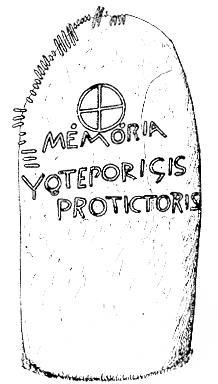
Latin Inscription
| Transcription | MEMORIA | VOTEPORIGIS | PROTICTORIS |
| Reading | MEMORIA VOTEPORIGIS PROTICTORIS |
| Translation | The memorial of Voteporix the Protector |
Ogham Inscription
| Ogham Text | ᚃᚑᚈᚓᚉᚑᚏᚔᚌᚐᚄ (left edge, bottom-to-top) |
| Transcription | FOTECORIGAS |
| Reading | VOTECORIGAS |
| Translation | Of Votecorix |
Eglwyscummin Stone (EGLWC/1)
| Site | St Margaret's Church, Eglwyscummin, Carmarthenshire. |
| NGR | SN 2310 1065 |
| Current Location | Inside the church. |
| History | Discovered in 1889 in the churchyard at which time it was being used as a step on the south side of the church. |
| Description | Sandstone pillar stone with a vertical Latin inscription in two lines on one face, and an Ogham inscription on the left and right edges. The top of the stone is broken off and missing. |
| Dimensions | 1.02 × 0.33 × 0.25 m. |
| Date | 400–533 (Nash-Williams 1950) 466–499 (Jackson 1953) |
| Notes | |
| References |
CISP EGLWC/1 Macalister 1945 #362 Nash-Williams 1950 142 |
|
Macalister 1945 #362 |
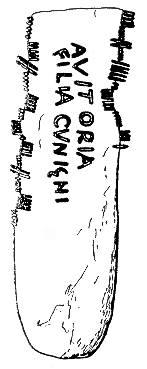
Latin Inscription
| Transcription | AVITORIA | FILIACVNIGNI |
| Reading | AVITORIA FILIA CVNIGNI |
| Translation | Avitoria daughter of Cunignus |
Ogham Inscription
| Ogham Text | ᚔᚅᚔᚌᚓᚅᚐᚉᚒᚅᚔᚌᚅᚔ (left edge, bottom-to-top) |
| ᚐᚃᚔᚈᚈᚑᚏᚔᚌᚓᚄ (right edge, bottom-to-top) | |
| Transcription | INIGENA CUNIGNI | AFITTORIGES |
| Reading | INIGENA CUNIGNI AVITTORIGES |
| Translation | Of the daughter of Cunignos, Avittoriga |
Llandawke Stone (LDWKE/1)
| Site | St Odoceus' Church, Llandawke, Carmarthenshire. |
| NGR | SN 2820 1120 |
| Current Location | Inside the church. |
| History | Discovered in 1838 in the churchyard. |
| Description | Pillar stone with a vertical Latin inscription in two lines on one face and one line on the left side, and an Ogham inscription along the left and right edges. |
| Dimensions | 1.37 × 0.30 × 0.08 m. |
| Date | 400–533 (Nash-Williams 1950) 400–450 (Thomas 1994) |
| Notes | |
| References |
CISP LDWKE/1 Macalister 1945 #368 Nash-Williams 1950 150 Ferguson 1887 198 |
|
Macalister 1945 #368 |
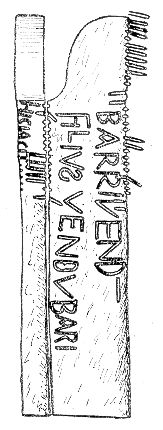
Latin Inscription
| Transcription | BARRIVENDꟷ | {FI}LIVSVENDVBARI | HICIACIT |
| Reading | BARRIVENDI FILIVS VENDVBARI HIC IACIT |
| Translation | Of Barrivendus, son of Vendubarus, he lies here |
Ogham Inscription
| Ogham Text | ᚇᚒᚋᚓᚂᚓᚇᚑᚅᚐᚄ (right edge, bottom-to-top) |
| ᚋᚐᚊᚔᚋᚒᚉᚑᚔ (left edge, bottom-to-top) | |
| Transcription | DUMELEDONAS | MAQIM[--] |
| Reading | DUMELEDONAS MAQI M[UCOI] [--] |
| Translation | Of Dumeledo, son of the tribe of ... |
Llangeler Stone (LGELR/1)
| Site | Capel Mair, Llangeler, Carmarthenshire. |
| NGR | SN 4030 3800 |
| Current Location | Inside the chapel. |
| History | Discoverd in 1828 in the chapel cemetery. |
| Description | Gritstone pillarstone with a vertical Latin inscription in two lines on one face, and an Ogham inscription along the right and top edges. |
| Dimensions | 1.05 × 0.46 × 0.10 m. |
| Date | 466–599 (Nash-Williams 1950) 475–525 (Thomas 1994) |
| Notes | |
| References |
CISP LGELR/1 Macalister 1945 #372 Nash-Williams 1950 160 |
|
Macalister 1945 #372 |
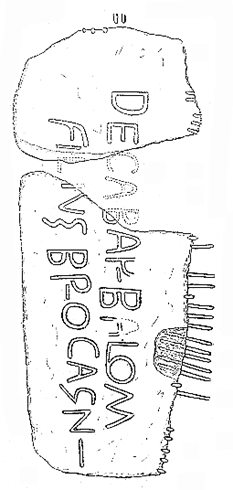
Latin Inscription
| Transcription | DE[CAB]ARBALOM | FILIVS BROCAGNꟷ |
| Reading | DECABARBALOM FILIUS BROCAGNI |
| Translation | Decabarbalom son of Brocagnus |
Ogham Inscription
| Ogham Text | ᚇᚓᚉᚉᚐᚔ ᚁᚐᚏᚃᚐᚂᚁᚋᚐᚊᚔᚁᚏᚑᚉᚐᚌᚅᚔ (right edge, bottom-to-top) |
| Transcription | [--]I BARFALB[--][R]O[--][L!][U!] |
| Reading | [DECCA]IBARVALB [MAQI B]RO[CAG]NI |
| Translation | Deccaibarvalb, son of Brocagnus |
| Notes | The inscription is extremely uncertain, and a number of different readings have been made. The reading above is based on Macalister 1945. |
St Ishmael Stone (SISHM/1)
| Site | All Saints Church, Llansaint, St Ishmael's (Llan Ishmael), Carmarthenshire. |
| NGR | SN 3846 0804 |
| Current Location | In Situ. |
| History | Discovered in 1846, at which time it was built into the external wall of the church. |
| Description | Pillar stone with a vertical Latin inscription in two lines on one face. The edges of the stone have been flaked away. |
| Dimensions | 1.47 × 0.27 m. |
| Date | |
| Notes | The Ogham inscription is very doubtful. According to Macalister the sides and tops of the stone have been flaked away in order destroy an original Ogham inscription, of which he sees the remnant strokes of a single letter. |
| References |
CISP SISHM/1 Macalister 1945 #376 Nash-Williams 1950 174 |
|
Macalister 1945 #376 |
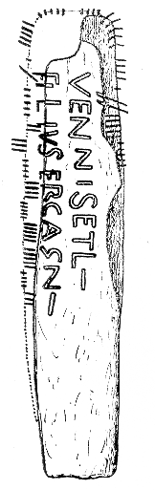
Latin Inscription
| Transcription | VENNISETLꟷ | FILIVSERC:AGNꟷ |
| Reading | VENNISETLI FILIVS ERCAGNI |
| Translation | Of Vennisetl, son of Ercagnus |
Ogham Inscription
| Ogham Text | ᚃᚓᚅᚅᚔᚄᚓᚈᚂᚔᚋᚐᚊᚔᚓᚏᚉᚐᚌᚅᚔ (left-top-right edges, top-to-bottom, then bottom to-top) |
| Transcription | [--]G[--] |
| Reading | [VENNISETLI MAQI ERCA]G[NI] |
| Translation | Of Ercagni |
Llanwinio Stone (LWNIO/1)
| Site | Llanwinio Church, Llanwinio, Carmarthenshire. |
| NGR | SN 2610 2646 |
| Current Location | Carmarthen Museum, Cast at National Museum of Wales [14.306/5], Cardiff. |
| History | Discovered in 1846 whilst digging the foundations of the new church at Llanwinio Carn. |
| Description | Pillar stone with a vertical Latin inscription in three lines on one face, an Ogham inscription on the left and right edges, and an engraved cross at one end. The top of the stone is broken off and missing. |
| Dimensions | 1.19 × 0.38 × 0.29 m. |
| Date | 400–599 (Nash-Williams 1950) 500–533 (Jackson 1953) 500–533 (McManus 1991) |
| Notes | The cross was probably added later, changing the original orientation of the stone. Macalister 1945 suggests that there would have been a third line of Ogham on the third edge of the stone, which is now broken off. |
| References |
CISP LWNIO/1 Macalister 1945 #378 Nash-Williams 1950 169 Ferguson 1887 201 |
|
Macalister 1945 #378 |
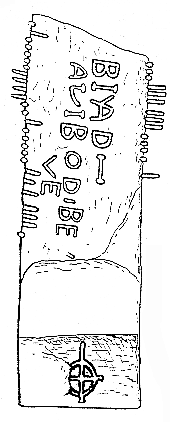
Latin Inscription
| Transcription | BI{VA}Dꟷ | AVIBODIBE | VE |
| Reading | BIVADI AVI BODIBEVE |
| Translation | Of Bivadus, grandson of Bodibeva |
Ogham Inscription
| Ogham Text | ᚁᚔᚃᚃᚔᚇᚑᚅᚐᚄ (right edge, bottom-to-top) |
| ᚐᚃᚃᚔᚁᚑᚇᚇᚔᚁᚓᚃᚃᚐᚄ (left edge, bottom-to-top) | |
| Transcription | BIFF[U!][--] | AFFIBODDIB[A!][--] |
| Reading | BIVV[IDONAS] AVVI BODDIB[EVVAS] |
| Translation | Of Bivvidu, grandson of Boddibevva |
Henllan Amgoed Stone (HENLL/1)
| Site | Parciau House, Henllan Amgoed, Carmarthenshire. |
| NGR | SN 1750 1970 |
| Current Location | In Situ (but moved to an adjacent field). |
| History | Found in 1697 in a field called Parc y Maen ("Field of the Stone"). |
| Description | Pillar stone with a vertical Latin inscription in two lines on one face. |
| Dimensions | 1.60 × 0.53 × 0.33 m. |
| Date | |
| Notes | The Ogham inscription is doubtful. "At best, for the greater part of its length, it is recognizable only by the hollows which the groups of letter-scores have left on the two sides of the angle" (Macalister 1945 pp.348-349). |
| References |
CISP HENLL/1 Macalister 1945 #364 Nash-Williams 1950 144 |
|
Nash-Williams 1950 #144 |
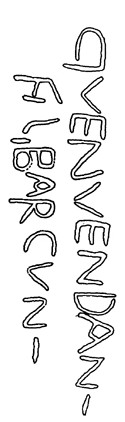
Latin Inscription
| Transcription | QUENVENDANꟷ | FILIBARCUNꟷ |
| Reading | QUENVENDANI FILI BARCUNI |
| Translation | Of Quenvendanus, son of Barcunus |
Ogham Inscription
| Ogham Text | ᚊᚒᚓᚅᚃᚓᚅᚇᚐᚅᚔᚋᚐᚊᚁᚐᚏᚉᚒᚅᚔ (left edge, bottom-to-top) |
| Transcription | [--]NFENDANIM[--]B[--]R[--] |
| Reading | [QUE]NVENDANI M[AQ] B[A]R[CUNI] |
| Translation | Of Quenvendanus, son of Barcunus |
Denbighshire (Sir Ddinbych)
Clocaenog Stone (CLOCG/1)
| Site | Bryn-y-Beddau, Clocaenog, Denbighshire. |
| NGR | SJ 0520 5320 |
| Current Location | National Museum of Wales [36.473], Cardiff. |
| History | Found in 1693 on the summit of a burial mound called Bryn-y-Beddau ("Hill of the Graves"). |
| Description | Sandstone pillar stone with a horizontal Latin inscription on one face, and an Ogham inscription on the left and right edges. |
| Dimensions | 2.00 × 0.64 × 0.58 m. |
| Date | 400–533 (Nash-Williams 1950) 466–499 (Jackson 1953) |
| Notes | |
| References |
CISP CLOCG/1 Macalister 1945 #399 Nash-Williams 1950 176 Ferguson 1887 195 |
|
Macalister 1945 #399 |
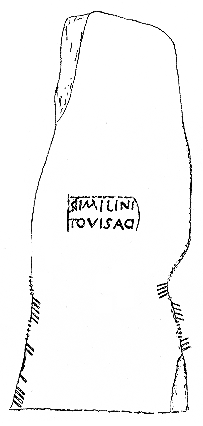
Latin Inscription
| Transcription | SIMILINI | TOVISACI |
| Reading | SIMILINI TOVISACI |
| Translation | Of Similinus the Prince |
Ogham Inscription
| Ogham Text | ᚄᚔᚁᚔᚂᚔᚅᚔ (left edge, bottom-to-top) |
| ᚈᚑᚃᚔᚄᚐᚉᚔ (right edge, bottom-to-top) | |
| Transcription | S[--]B[--]L[--]N[--] | [--]FISACI |
| Reading | S[I]B[I]L[I]N[I] [TO]VISACI |
| Translation | Of Sibilinus the Prince |
Pentrefoelas Stone (PTREF/1)
| Site | Ty'n y bryn Farm, Dol tre beddau, Pentrefoelas, Conwy. |
| NGR | SJ 0760 3000 |
| Current Location | Pentrefoelas Hall. |
| History | Discovered in 1820, lining a grave in a cemetery of forty graves under Ty'n y bryn Farm. |
| Description | Pillar stone with a vertical Latin inscription in three lines on one face. |
| Dimensions | 1.52 × 0.52 × 0.08 m. |
| Date | 400–533 (Nash-Williams 1950) 500–549 (Jackson 1953) |
| Notes | The Ogham inscription is doubtful, and has only been recognised by Macalister. |
| References |
CISP PTREF/1 Macalister 1945 #401 Nash-Williams 1950 183 |
|
Macalister 1945 #401 |
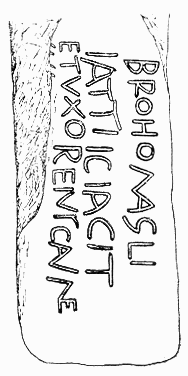
Latin Inscription
| Transcription | BROHO{MA}GLI | IATTIICIACIT | ETVXOREIVSC{AV}{NE} |
| Reading | BROHOMAGLI IATTI <H>IC IACIT ET UXOR EIUS CAUNE |
| Translation | Of Brohomaglus Iattus; he lies here, and his wife Caune |
Ogham Inscription
| Ogham Text | ᚁᚏᚑᚆᚑᚋᚐᚌᚂᚔ (right edge, top-to-bottom) |
| Transcription | [--]R[--] |
| Reading | [B]R[OHOMAGLI] |
| Translation | Of Brohomaglus |
Glamorganshire (Sir Forgannwg)
Tirphil Stone (TIRPH/1)
| Site | Capel Brithdir, Bargoed, Gelli-gaer, Tirphil, Caerphilly. |
| NGR | SO 1375 0262 |
| Current Location | National Museum of Wales [23.283], Cardiff. |
| History | Found in 1861 in a field next to Capel Brithdir. |
| Description | Sandstone pillar stone with a vertical Latin inscription in four lines on one face. |
| Dimensions | 2.25 × 1.00 × 0.22 m. |
| Date | |
| Notes | The Ogham inscription is doubtful, and has only been recognised by Macalister. "There are no oghamic marks whatever upon the edges" (Jones 1862 p.220). "The suggestion that there are traces of Ogam cannot be maintained" (Royal Commission on Ancient and Historical Monuments in Wales 1976 p.36). |
| References |
CISP TIRPH/1 Macalister 1945 #404 Nash-Williams 1950 270 |
|
Macalister 1945 #404 |
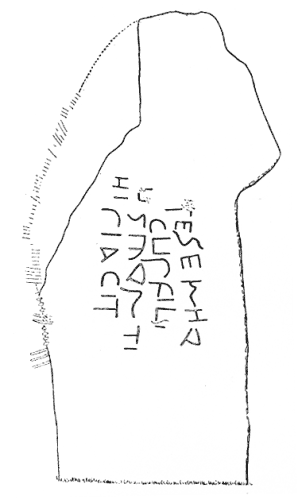
Latin Inscription
| Transcription | TEGERNA | CUSFILI | USMARTI | HICIACIT |
| Reading | TEGERNACUS FILIUS MARTI HIC IACIT |
| Translation | Tegernacus, son of Martius, lies here |
Ogham Inscription
| Ogham Text | ᚈᚓᚌᚓ (left edge, bottom-to-top) |
| Transcription | TEGE[--] |
| Reading | TEGE[--] |
| Translation | Tege... |
Kenfig Stone (KENFG/1)
| Site | Kenfig, Bridgend. |
| NGR | SS 8000 8400 |
| Current Location | Margam Stones Museum [no. 2], Port Talbot. |
| History | Discovered in 1578 by the side of the road between Eglwys Nynnydd and Pyle Station. |
| Description | Sandstone pillar stone with a vertical Latin inscription in two lines on one face, and an Ogham inscription on the left and right edges. |
| Dimensions | 1.35 × 0.52 × 0.35 m. |
| Date | 500–599 (Nash-Williams 1950) |
| Notes | |
| References |
CISP KENFG/1 Macalister 1945 #409 Nash-Williams 1950 198 Ferguson 1887 204 Brash 1869 151 |
|
Macalister 1945 #409 |
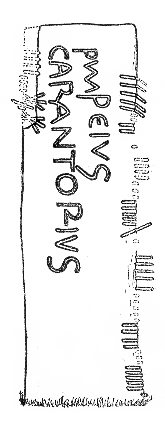
Latin Inscription
| Transcription | P{VM}PEIVS | CARANTORIVS |
| Reading | PVMPEIVS CARANTORIVS |
| Translation | Pumpeius Carantorius |
Ogham Inscription
| Ogham Text | ᚘᚑᚘᚔᚐᚄ (left edge, bottom-to-top) |
| Ogham Text | ᚏᚑᚂᚔᚑᚅᚋᚐᚊᚔᚂᚂᚓᚅᚐ (right edge, top-to-bottom) |
| Transcription | POPIA[--] | ROL[--]NM[--]ILL[--]NA |
| Reading | POPIA[S] ROL[IO]N M[AQ]I LL[E]NA |
| Translation | Of Popia, ... son of Llena |
| Notes | Macalister reads two separate inscriptions, PAMPES (corresponding to the Latin PVMPEIVS) and ROL[ACU]N M[A]Q ILLUNA. |
Margam Stone (MARG1/1)
| Site | Margam Mountain (Mynydd Margam), Margam, Neath Port Talbot. |
| NGR | SS 8306 8878 |
| Current Location | Margam Stones Museum [no. 3], Port Talbot. |
| History | Discovered in 1695 on Margam Mountain, near a pool called Llyn-dwr-mawr. |
| Description | Pillar stone with a vertical Latin inscription in four lines on one face, and an engraved Maltese cross on the top. |
| Dimensions | 1.01 × 0.33 × 0.22 m. |
| Date | 500–599 (Nash-Williams 1950) |
| Notes | Marked as an Ogham stone on the Ordnance Survey Map of Britain in the Dark Ages, but no Ogham inscription is noted in the CISP database. |
| References |
CISP MARG1/1 Macalister 1945 #408 Nash-Williams 1950 229 |
|
Macalister 1945 #408 |
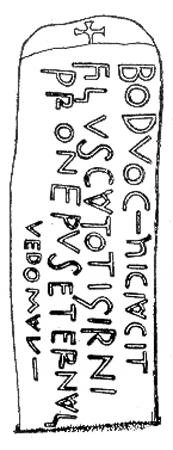
Latin Inscription
| Transcription | BODVOCꟷHICI{A}CIT | {FI}{LI}VSC{A}TOTIGIRNI | PRONEPVSETERN{A}L/I | VEDOM{A}Vꟷ |
| Reading | BODVOCI HIC IACIT FILIVS CATOTIGIRNI PRONEPVS ETERNALI VEDOMAVI |
| Translation | Of Bodvoc, here lies the son of Catotigirnus and great-grandson of Eternalis Vedomavus |
Loughor Stone (LOUGH/1)
| Site | Loughor Rectory, Loughor, Swansea. |
| NGR | SS 5753 9816 |
| Current Location | Swansea Museum [SWASM:SM1952.11]. |
| History | Discovered in 1857 in Loughor Rectory garden, at which time it was being used as a step leading up to the house. |
| Description | Sandstone Roman altar stone with a fragmentary Ogham inscription along one edge of the base. |
| Dimensions | 1.10 × 0.53 × 0.53 m. |
| Date | 400–533 (Nash-Williams 1950) |
| Notes | Roman altar. |
| References |
CISP LOUGH/1 Macalister 1945 #405 Nash-Williams 1950 228 Ferguson 1887 186 Brash 1869 167 |
|
Macalister 1945 #405 |
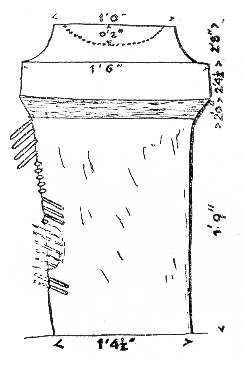
Ogham Inscription
| Ogham Text | ᚂ ᚂᚔᚉᚐ (left edge, bottom-to-top) |
| Transcription | [--]L[--][L^V]ICA |
| Reading | [--]L[--][L^V]ICA |
| Translation | Of ...lica (or Of ...vica) |
| Notes | Macalister reads the name as G[R]AVICA. |
Pembrokeshire (Sir Benfro)
Brawdy Stone I (BRAW1/1)
| Site | Cas Wilia (Castell Villia) Farm, Brawdy, Pembrokeshire. |
| NGR | SM 8820 2760 |
| Current Location | Inside the Church porch, Brawdy church. |
| History | Discovered in 1883, at which time it was being used as a gatepost. |
| Description | Irregularly shaped pillar stone with an Ogham inscription along one edge. |
| Dimensions | 2.69 × 0.84 × 0.56 m. |
| Date | 400–533 (Nash-Williams 1950) |
| Notes | |
| References |
CISP BRAW1/1 Macalister 1945 #423 Nash-Williams 1950 296 |
|
Macalister 1945 #423 |
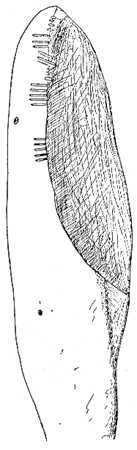
Ogham Inscription
| Ogham Text | ᚋᚐᚊᚔᚊᚐᚌᚈᚓ (left edge, bottom-to-top) |
| Transcription | M[--]Q[--]QAGTE |
| Reading | M[A]Q[I] QAGTE |
| Translation | [...] the son of Quagte |
Brawdy Stone II (BRAW3/1)
| Site | Cas Wilia (Castell Villia) Farm, Brawdy, Pembrokeshire. |
| NGR | SM 8840 2750 |
| Current Location | Inside the Church porch, St David's Church, Brawdy. |
| History | Discovered in 1680, at which time it was being used as a footbridge over a stream. |
| Description | Pillar stone with a vertical Latin inscription in three lines on one face, and an Ogham inscription along the left edge. |
| Dimensions | 2.06 × 0.53 × 0.38 m. |
| Date | 500–599 (Nash-Williams 1950) 500–599 (Thomas 1994) |
| Notes | |
| References |
CISP BRAW3/1 Macalister 1945 #422 Nash-Williams 1950 298 |
|
Macalister 1945 #422 |
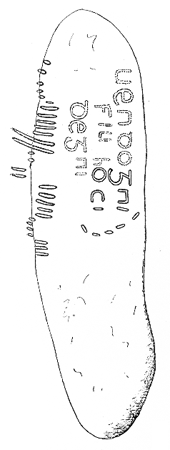
Latin Inscription
| Transcription | VENDAGNI | FILI V[--] | [--]NI |
| Reading | VENDAGNI FILI V[--]NI |
| Translation | Vendagnus, son of V[..]nus |
Ogham Inscription
| Ogham Text | ᚃᚓᚅᚇᚑᚌᚅᚔ (left edge, bottom-to-top) |
| Transcription | FENDOGNI |
| Reading | VENDOGNI |
| Translation | Of Vendognus |
Bridell Stone (BRIDL/1)
| Site | St David's Church, Bridell, Pembrokeshire. |
| NGR | SN 1766 4206 |
| Current Location | In Situ. |
| History | Discovered in 1860 in the churchyard. |
| Description | Pointed pillar stone with an engraved cross on one face, and an Ogham inscription along the left edge. |
| Dimensions | 2.29 × 0.66 × 0.17 m. |
| Date | 400–599 (Nash-Williams 1950) 420–430 (Thomas 1994) |
| Notes | |
| References |
CISP BRIDL/1 Macalister 1945 #426 Nash-Williams 1950 300 Ferguson 1887 203 |
|
Macalister 1945 #426 |
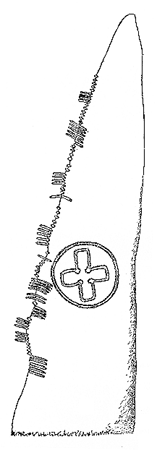
Ogham Inscription
| Ogham Text | ᚅᚓᚈᚈᚐᚄᚐᚌᚏᚔᚋᚐᚊᚔᚋᚒᚉᚑᚔᚁᚏᚔᚓᚉᚔ (left edge, bottom-to-top) |
| Transcription | NETTASAGRIMAQIMUCOIBRIECI |
| Reading | NETTASAGRI MAQI MUCOI BRIECI |
| Translation | Of Nettasagrus, son of the tribe of Brecos |
| Notes | This is the reading given by Thomas 1994. Macalister 1945 and Nash-Williams 1950 give slightly different readings, NETTASAGRI MAQI MUCOE BRIACI and NETTASAGRU MAQI MUCOI BRECI respectively. |
Caldey Island Stone (CALDY/1)
| Site | Caldey Priory, Caldey Island (Ynys Byr), Penally, Pembrokeshire. |
| NGR | SS 1400 9630 |
| Current Location | Inside the restored priory chapel, Caldey Island. |
| History | Discovered in 1810 in the ruins of the old priory. |
| Description | Sandstone pillar stone with a horizontal Latin inscription in eight lines on one face, an Ogham inscription on the left and right edges, and an engraved cross on each of the four faces. |
| Dimensions | 1.73 × 0.41 × 0.10 m. |
| Date | 400–599 (Nash-Williams 1950) |
| Notes | |
| References |
CISP CALDY/1 Macalister 1945 #427 Nash-Williams 1950 301A Ferguson 1887 202 |
|
Macalister 1945 #427 |
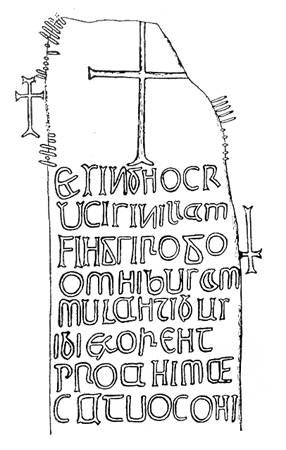
Latin Inscription
| Transcription | E/TSINGNOCR | UCISINILLAM | FINGSIROGO | OMNIBUSAM | MULANTIBUS | IBIEXORENT | PROANIMÆ | CATUOCONI |
| Reading | ET SIGNO CRUCIS IN ILLAM FINXI ROGO OMNIBUS AMBULANTIBUS IBI EXORENT PRO ANIMÆ CATUOCONI |
| Translation | And by the sign of the Cross (which) I have fashioned upon that (stone) I ask all who walk there that they pray for the soul of Catuoconus |
Ogham Inscription
| Ogham Text | ᚋᚐᚌᚂᚔᚐᚇᚒᚁᚏᚐᚉᚒᚅᚐᚄ (left edge, bottom-to-top) |
| ᚋᚐᚊᚔ ᚔᚅᚁ (right edge, top-to-bottom) | |
| Transcription | MAGL[--]DUBR[--] | [--]INB |
| Reading | MAGL[IA] DUBR[ACUNAS] [MAQI] [--]INB |
| Translation | Of Maglia-Dubracunas, son of ... |
| Notes | This is the reading given by Nash-Williams 1950. Macalister reads the letters on the right edge as QI instead of INB. |
Cilgerran Stone (CILGN/1)
| Site | St Llawddog's Church, Cilgerran, Pembrokeshire. |
| NGR | SN 1960 4305 |
| Current Location | In Situ. |
| History | Discovered in 1855 in the churchyard, at the south side of the church. |
| Description | Pillar stone with a vertical Latin inscription in two lines on one face, and an Ogham inscription along the right edge. |
| Dimensions | 1.50 × 0.34 × 0.34 m. |
| Date | 500–599 (Nash-Williams 1950) 600–633 (Jackson 1953) 600–633 (Thomas 1994) |
| Notes | |
| References |
CISP CILGN/1 Macalister 1945 #428 Nash-Williams 1950 305 Ferguson 1887 194 |
|
Photograph by Plucas58, 16 June 2010 |
Macalister 1945 #428 |

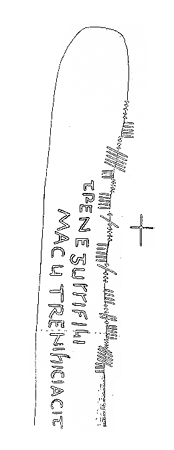
Latin Inscription
| Transcription | TRENEGUSSIFILI | MACUTRENIHICIACIT |
| Reading | TRENEGUSSI FILI MACUTRENI HIC IACIT |
| Translation | Of Trenegussus, son of Macutrenus, he lies here |
Ogham Inscription
| Ogham Text | ᚈᚏᚓᚅᚐᚌᚒᚄᚔᚋᚐᚊᚔᚋᚐᚊᚔᚈᚏᚓᚅᚔ (right edge, bottom-to-top) |
| Transcription | TRENAGUSIMAQIMAQITRENI |
| Reading | TRENAGUSI MAQI MAQITRENI |
| Translation | Of Trenagusus, son of Maquitrenus |
Clydau Stone I (CLYDI/1)
| Site | St Clydey's Church, Clydau (Clydaï), Pembrokeshire. |
| NGR | SN 2500 3540 |
| Current Location | Inside the church. |
| History | Discovered in 1860 in the north wall of the churchyard. |
| Description | Pillar stone with a vertical Latin inscription in one line on one face, and an Ogham inscriptuion along the left and right edges. The top of the stone has been trimmed away to make a base for a sundial, losing part of he Ogham inscription. |
| Dimensions | 1.79 × 0.33 × 0.25 m. |
| Date | 400–533 (Nash-Williams 1950) 500–533 (Jackson 1953) |
| Notes | |
| References |
CISP CLYDI/1 Macalister 1945 #430 Nash-Williams 1950 306 Ferguson 1887 193 |
|
Macalister 1945 #430 |
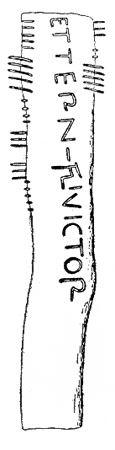
Latin Inscription
| Transcription | ETTERNꟷ{FIL}IVICTOR |
| Reading | ETTERNI FILI VICTOR |
| Translation | Of Etternus, son of Victor |
Ogham Inscription
| Ogham Text | ᚓᚈᚈᚓᚏᚅᚔ (left edge, bottom-to-top) |
| ᚋᚐᚊᚔᚃᚔᚉᚈᚑᚏ (right edge, top-to-bottom) | |
| Transcription | ETTERN[--] | [--]TOR |
| Reading | ETTERN[I] [MAQI VIC]TOR |
| Translation | Of Etternus, son of Victor |
Clydau Stone II (CLYDI/3)
| Site | St Clydey's Church, Clydau (Clydaï), Pembrokeshire. |
| NGR | SN 2500 3540 |
| Current Location | Inside the church. |
| History | Discovered in 1698 in the churchyard. |
| Description | Pillar stone with a vertical Latin inscription in two lines on one face, an Ogham inscription along the right edge, and an engraved cross at one end. |
| Dimensions | 1.47 × 0.41 × 0.13 m. |
| Date | 400–533 (Nash-Williams 1950) 500–566 (Jackson 1953) |
| Notes | The cross was added later, changing the original orientation of the stone. |
| References |
CISP CLYDI/3 Macalister 1945 #431 Nash-Williams 1950 308 Ferguson 1887 200 |
|
Macalister 1945 #431 |
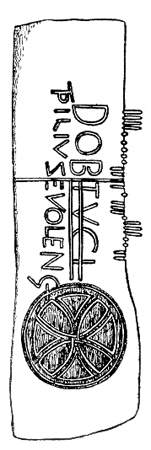
Latin Inscription
| Transcription | DOB[-]TVCI | FILIVSEVOLENG[-] |
| Reading | DOB[I]TVCI FILIVS EVOLENG[I] |
| Translation | Of Dobitucus, son of Evolengus |
Ogham Inscription
| Ogham Text | ᚇᚑᚃᚐᚈᚒᚉᚓᚐᚄ (right edge, bottom-to-top) |
| Transcription | D[--]F[--]TUCEAS |
| Reading | D[O]V[A]TUCEAS |
| Translation | Of Dovatucis |
| Notes | This is the reading given by Nash-Williams 1950. Macalister 1945 reads DOVATACIS. |
Jordanston Stone (JRDNS/1)
| Site | Llangwarren House, Jordanston, Pembrokeshire. |
| NGR | SM 9290 3130 |
| Current Location | Built into the external corner of a stable adjoining Llangwarren House. |
| History | Discovered in 1896 on the Llangwarren farm, at which time it was being used as a gatepost. |
| Description | Pillar stone with a vertical Latin inscription in two lines on one face, and an Ogham inscription along the left edge. |
| Dimensions | 1.45 × 0.58 × 0.25 m. |
| Date | 400–533 (Nash-Williams 1950) 466–533 (Jackson 1953) |
| Notes | |
| References |
CISP JRDNS/1 Macalister 1945 #432 Nash-Williams 1950 312 |
|
Macalister 1945 #432 |
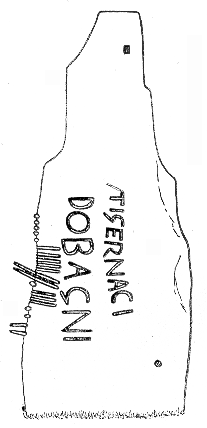
Latin Inscription
| Transcription | TIGERNACI | DOBAGNI |
| Reading | TIGERNACI DOBAGNI |
| Translation | Of Tigernacus Dobagnus |
Ogham Inscription
| Ogham Text | ᚇᚑᚃᚐᚌᚅᚔ (left edge, bottom-to-top) |
| Transcription | DOFAGNI |
| Reading | DOVAGNI |
| Translation | Of Dovagnus |
Llandeilo Stone (LDEIL/1)
| Site | St Teilo's Church, Llandeilo (Llandilo), Maenclochog, Pembrokeshire. |
| NGR | SN 0996 2691 |
| Current Location | By the gateway to the churchyard of the now ruined St Teilo's Church. |
| History | Discovered in 1889 inside the church. |
| Description | Pillar stone with a vertical Latin inscription in two lines on one face, an Ogham inscription along the left edge, and an engraved cross at one end. |
| Dimensions | 1.73 × 0.46 × 0.18 m. |
| Date | 400–533 (Nash-Williams 1950) 500–566 (Jackson 1953) |
| Notes | |
| References |
CISP LDEIL/1 Macalister 1945 #433 Nash-Williams 1950 313 |
|
Macalister 1945 #433 |
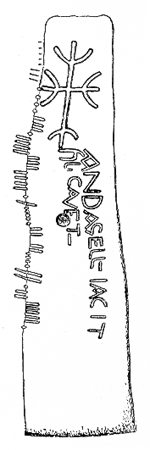
Latin Inscription
| Transcription | ANDAGELLꟷIACIT | {FI}LIC{AV}ETꟷ |
| Reading | ANDAGELLI IACIT FILI CAVETI |
| Translation | Of Andagellus, he lies (here), the son of Cavetus |
Ogham Inscription
| Ogham Text | ᚐᚅᚇᚐᚌᚓᚂᚂᚔᚋᚐᚉᚃᚉᚐᚃᚓᚈᚔ (left edge, bottom-to-top) |
| Transcription | [--]NDAGELLIMACFCAF[--] |
| Reading | [A]NDAGELLI MACV CAV[ETI] |
| Translation | Of Andagellus, son of Cavetus |
| Notes | The unusual MACV for MAQI is read as macu by Thomas 1994. |
Llanfrynach Stone (LFRN2/1)
| Site | Trehowel Farm, Mynydd Stambar, Llanfrynach, Pembrokeshire. |
| NGR | SN 1740 2920 |
| Current Location | In the graveyard of Glandwr Baptist Chapel. |
| History | Discovered in 1908 near Trehowel farmhouse, at which time it was being used as a gatepost. |
| Description | Pillar stone with an engraved cross on one face, and an Ogham inscription along the right edge. |
| Dimensions | 1.45 × 0.32 × 0.35 m. |
| Date | 400–533 (Nash-Williams 1950) |
| Notes | |
| References |
CISP LFRN2/1 Macalister 1945 #439 Nash-Williams 1950 319 |
|
Macalister 1945 #439 |
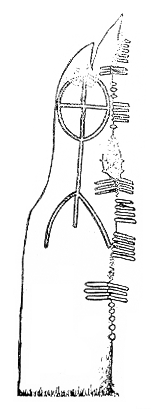
Ogham Inscription
| Ogham Text | ᚓᚃᚓᚄᚄᚐᚅᚌᚔᚐᚄᚓᚌᚅᚔ (right edge, bottom-to-top) |
| Transcription | EF[--]SS[--]NG[--]ASEG[--] |
| Reading | EF[E]SS[A]NG[I] ASEG[NI] |
| Translation | Of Efessangus Asegnus |
| Notes | This is the reading given in Nash-Williams 1950. Macalister 1945 reads the inscriptions as INg[E]NS[A]Ng[KT]ASEGNI (=INGEN SANGKTA SEGNI) "The sainted daughter of Segne". |
Mathry Stone (MTHRY/1)
| Site | Mathry Church, Mathry, Pembrokeshire. |
| NGR | SM 8790 3200 |
| Current Location | Inside the church porch. |
| History | Discovered in 1698 (in the churchyard?) |
| Description | Pillar stone with a horizontal Latin inscription in four lines on one face. |
| Dimensions | 1.35 × 0.43 × 0.18 m. |
| Date | 400–533 (Nash-Williams 1937) 466–533 (Jackson 1953) |
| Notes | The Ogham inscription is uncertain. "Mutilated traces of Ogams" (Nash-Williams 1937 p.386); "Illegible ogam" (Jackson 1953 p.140). |
| References |
CISP MTHRY/1 Macalister 1945 #442 Nash-Williams 1950 346 |
|
Nash-Williams 1950 #346 |
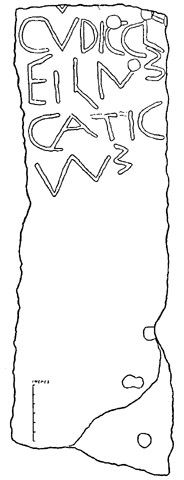
Latin Inscription
| Transcription | [MAC] | CVDICCL[I] | FILIVS | CATIC | VVS |
| Reading | MACCVDICCL[I] FILIVS CATICVVS |
| Translation | Of Maccudicclus, son [of] Caticuus |
Nevern Stone I (NEVRN/1)
| Site | St Brynach's Church, Nevern, Pembrokeshire. |
| NGR | SN 0830 4000 |
| Current Location | Inside the church (built into the sill of the east window in the south wall). |
| History | Discovered in 1904 inside the church, at which time it was being used as a lintel. |
| Description | Pillar stone with a vertical Latin inscription in one line on one side, and an Ogham inscription along the left and top edges. |
| Dimensions | 1.59 × 0.33 × 0.10 m. |
| Date | 400–533 (Nash-Williams 1950) 500–540 (Thomas 1994) 450–499 (Jackson 1953) |
| Notes | |
| References |
CISP NEVRN/1 Macalister 1945 #446 Nash-Williams 1950 353 |
|
Macalister 1945 #446 |
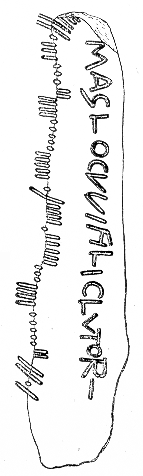
Latin Inscription
| Transcription | MAGLOCVNFILICLVTORꟷ |
| Reading | MAGLOCVN<I> FILI CLVTORI |
| Translation | Of Maglocunus, son of Clutorius |
Ogham Inscription
| Ogham Text | ᚋᚐᚌᚂᚔᚉᚒᚅᚐᚄᚋᚐᚊᚔᚉᚂᚒᚈᚐᚏᚔ (left edge, bottom-to-top) |
| Transcription | MAGLICUNASMAQICLUTA[RI] |
| Reading | MAGLICUNAS MAQI CLUTA[RI] |
| Translation | Of Maglicunas, son of Clutarias |
Nevern Stone II (NEVRN/2)
| Site | St Brynach's Church, Nevern, Pembrokeshire. |
| NGR | SN 0830 4000 |
| Current Location | In the churchyard (near the south wall of the nave). |
| History | Discovered in 1695 in the churchyard on the north side of the church. |
| Description | Pillar stone with a horizontal Latin inscription in two lines on one face, and an Ogham inscription along the left edge. |
| Dimensions | 1.93 × 0.61 × 0.51 m. |
| Date | 400–533 (Nash-Williams 1950) 400–499 (Jackson 1953) 466–533 (Thomas 1994) |
| Notes | |
| References |
CISP NEVRN/2 Macalister 1945 #445 Nash-Williams 1950 354 Ferguson 1887 188 |
|
Macalister 1945 #445 |
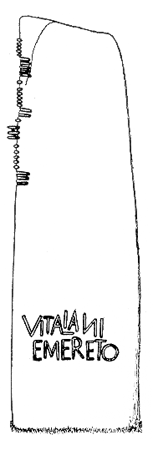
Latin Inscription
| Transcription | VIT{AL}IANI | EMERETO |
| Reading | VITALIANI EMERETO |
| Translation | Of Vitalianus Emereto(s) |
Ogham Inscription
| Ogham Text | ᚃᚔᚈᚐᚂᚔᚐᚅᚔ (left edge, bottom-to-top) |
| Transcription | FITALIANI |
| Reading | VITALIANI |
| Translation | Of Vitalianus |
St Dogmaels> Stone (SDOGM/1)
| Site | St Dogmaels Abbey, St Dogmaels, Pembrokeshire. |
| NGR | SN 1640 4580 |
| Current Location | Inside St Thomas's Church. |
| History | Discovered in 1694, at which time it was being used as footbridge over a brook in the grounds of the abbey. |
| Description | Gritstone pillar stone with a vertical Latin inscription in two lines on one face, and an Ogham inscriptin along the left edge. |
| Dimensions | 2.13 × 0.48 × 0.20 m. |
| Date | 400–533 (Nash-Williams 1950) 466–533 (Jackson 1953) |
| Notes | |
| References |
CISP SDOGM/1 Macalister 1945 #449 Nash-Williams 1950 384 Ferguson 1887 191 Brash 1869 155 |
|
Macalister 1945 #449 |
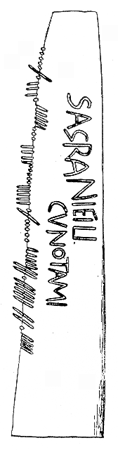
Latin Inscription
| Transcription | SAGRANIFILI | CVNOTAMI |
| Reading | SAGRANI FILI CVNOTAMI |
| Translation | Of Sagranus, son of Cunotamus |
Ogham Inscription
| Ogham Text | ᚄᚐᚌᚏᚐᚌᚅᚔᚋᚐᚊᚔᚉᚒᚅᚐᚈᚐᚋᚔ (left edge, bottom-to-top) |
| Transcription | SAGRAGNIMAQICUNATAMI |
| Reading | SAGRAGNI MAQI CUNATAMI |
| Translation | Of Sagragnus, son of Cunatamus |
St Dogwell's Stone (SDOGW/1)
| Site | Little Trefgarne (Trefgarn Fach) Farm, St Dogwell's, Pembrokeshire. |
| NGR | SM 9640 2420 |
| Current Location | In the churchyard at St Dogwell's Church. |
| History | Found in 1875, at which tie it was being used as a gatepost on the road leading to the farm. |
| Description | Irregularly shaped pillar stone with a vertical Latin inscription in two lines on one face, and an Ogham inscription along the right edge. |
| Dimensions | 1.85 × 0.53 × 0.23 m. |
| Date | 500–599 (Nash-Williams 1950) 500–533 (Jackson 1953) |
| Notes | |
| References |
CISP SDOGW/1 Macalister 1945 #450 Nash-Williams 1950 390 Ferguson 1887 190 |
|
Macalister 1945 #450 |
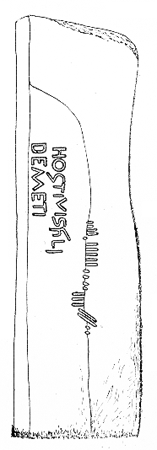
Latin Inscription
| Transcription | HOGTIVISFILI | DEMETI |
| Reading | HOGTIVIS FILI DEMETI |
| Translation | Of Hogtivis, son of Demetus |
Ogham Inscription
| Ogham Text | ᚑᚌᚈᚓᚅᚐᚄ (medial edge, bottom-to-top) |
| Transcription | OGTEN[--] |
| Reading | OGTEN[AS] |
| Translation | Of Ogtenas |
| Notes | This is the reading of Macalister 1945 and Thomas 1994. Rhys 1918 and Nash-Williams 1950 give the reading OGTEN[LO]. |
Spittal Stone (SPTTL/1)
| Site | St Mary's Church, Spittal, Pembrokeshire. |
| NGR | SM 9758 2291 |
| Current Location | In the porch of St Mary's Church. |
| History | Discovered in 1861 in the churchyard at the east side of the south porch. |
| Description | Pillar stone with a vertical Latin inscription in three lines on one face. |
| Dimensions | 1.47 × 0.53 × 0.46 m. |
| Date | 400–533 (Nash-Williams 1950) |
| Notes | Information about the stone in situ states that originally there were both Latin and Ogham inscriptions on it, but the Ogham letters are no longer visible. However, neither the CISP database nor the Ordnance Survey Map of Britain in the Dark Ages indicate an Ogham inscription on this stone. |
| References |
CISP SPTTL/1 Macalister 1945 #454 Nash-Williams 1950 402 |
|
Macalister 1945 #454 |
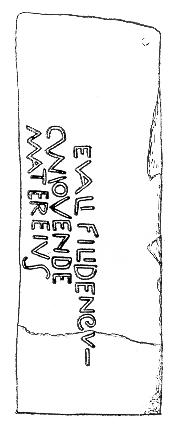
Latin Inscription
| Transcription | E{VA}LIFILIDENCVꟷ | C{VN}IOVENDE | {MA}TEREIVS |
| Reading | EVALI FILI DENCVI CVNIOVENDE MATER EIVS |
| Translation | Of Evalus, son of Dencuus; Cuniovende, his mother [set it up(?)] |
Steynton Stone (STNTN/1)
| Site | Church of St Peter and St Cewydd, Steynton, Pembrokeshire. |
| NGR | SM 9180 0780 |
| Current Location | Inside the church. |
| History | Found 1875 or earlier, and used as a gravestone in the churchyard (near the south-east end of the church) from 1875. Ogham inscription first recognised in 1880. |
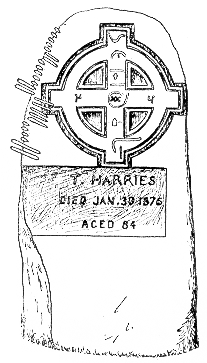
| Description | Pillar stone with an engraved cross on one face, and an Ogham inscription along the left edge. |
| Dimensions | 1.24 × 0.51 × 0.27 m. |
| Date | 400–533 (Nash-Williams 1950) 466–499 (Thomas 1994) |
| Notes | Used as a gravestone in Victorian times, with an epitaph to T. Harries (died 30 January 1875) who reputedly found the stone. |
| References |
CISP STNTN/1 Macalister 1945 #456 Nash-Williams 1950 404 |
|
Macalister 1945 #456 |

Latin Inscription
| Transcription | GE[NDILI] |
| Reading | GE[NDILI] |
| Translation | Of Gendilus |
Ogham Inscription
| Ogham Text | ᚌᚓᚅᚇᚔᚂᚔ (left edge, bottom-to-top) |
| Transcription | GENDILI |
| Reading | GENDILI |
| Translation | Of Gendilius |
References
- CISP : Celtic Inscribed Stones Project. Department of History and the Institute of Archaeology, University College London.
- NMR : National Monuments Records. English Heritage.
- Brash 1869 : Richard Rolt Brash, "The Ogham Inscribed Stones of Wales"; in Archæologia Cambrensis 3rd series vol.15 (1869) pages 148–167.
- Ferguson 1887 : Samuel Ferguson, Ogham Inscriptions in Ireland, Wales, and Scotland. Edinburgh, 1887.
- Jackson 1953 : K. H. Jackson, Language and History in Early Britain. Edinburgh: Edinburgh University Press, 1953.
- Macalister 1945 : R. A. S. Macalister, Corpus Inscriptionum Insularum Celticarum Vol. I. Dublin: Stationery Office, 1945.
- Nash-Williams 1950 : V. E. Nash-Williams, The Early Christian Monuments of Wales. Cardiff: University of Wales Press, 1950.
- Okasha 1993 : Elisabeth Okasha, Corpus of Early Christian Inscribed Stones of South-west Britain. Leicester: Leicester University Press, 1993.
- Thomas 1994 : Charles Thomas, And Shall These Mute Stones Speak? Post-Roman Inscriptions in Western Britain. Cardiff, 1994.
Further Reading
- Lloyd Laing, The Archaeology of Late Celtic Britain and Ireland, c. 400–1200 AD. Methuen, 1975.
- Patrick Sims-Williams, The Celtic Inscriptions of Britain: Phonology And Chronology, c.400-1200. Wiley-Blackwell, 2003.
- Nancy Edwards, Early-Medieval Inscribed Stones and Stone Sculpture in Wales: Context and Function; in Journal of Medieval Archaeology vol. 45 (2001) pp.15–39.
- A Corpus of Early Medieval Inscribed Stones and Stone Sculpture in Wales University of Wales Press, 2007 (Vols. I and II) and forthcoming (Vol.III).
Key
The following conventions are used in the transcription of Latin, Runic and Ogham inscriptions :
- [X] = letter X assumed but it is unclear or uncertain
- [X^Y] = letter is uncertain but may be either X or Y
- [X!] = Ogham letter is incomplete, and may be X or any letter from the same series as X with more strokes than X (e.g. [T!] is equivalent to [T^C^Q], and [A!] is equivalemt to [A^O^U^E^I])
- [-] = single missing or obliterated letter
- [--] = unknown number of missing or obliterated letters
- {X} = unusual glyph form of letter X (description on mouseover)
- {XY} = ligatured form of letters X and Y
- (X) = letter X in the inscription is extraneous and should be omitted in the reading
- <X> = letter X is missing in the insciption and should be added in the reading
| Letter | Name | Transcription | Notes |
|---|---|---|---|
| ᚁ | Beith | B | |
| ᚂ | Luis | L | |
| ᚃ | Fearn | F | Read as F or V. |
| ᚄ | Sail | S | |
| ᚅ | Nion | N | |
| ᚆ | Uath | H | |
| ᚇ | Dair | D | Variants include 'Rabbit-eared D'. |
| ᚈ | Tinne | T | |
| ᚉ | Coll | C | |
| ᚊ | Ceirt | Q | |
| ᚋ | Muin | M | |
| ᚌ | Gort | G | |
| ᚍ | nGéadal | W | Read as Ng or Gw. |
| ᚎ | Straif | Z | Read as Z or St. |
| ᚏ | Ruis | R | Double R is occasionally written as a crosshatched ligature. |
| ᚐ | Ailm | A | Variants include 'Hammerhead A' and 'S-shaped A'. |
| ᚑ | Onn | O | |
| ᚒ | Úr | U | |
| ᚓ | Eadhadh | E | |
| ᚔ | Iodhadh | I | |
| ᚕ | Eabhadh | X | Read as É or K. |
| ᚖ | Ór | Ó | |
| ᚗ | Uilleann | Ú | |
| ᚘ | Ifin | P | Written as a single cross under the stemline in epigraphic texts. |
| ᚙ | Eamhancholl | Not found in epigraphic texts. |
Fonts
This page is best viewed if the set of 12 BabelStone Ogham fonts are installed on your system.
In order to see the Latin Epigraphic Letter Sideways I (ꟷ) it is recommended to install the BabelStone Roman font or the Doulos SIL font (version 5.000 or later).
Revised: 2015-03-02
Index of BabelStone Blog Posts